
How Does Tennis Builds Neural Pathways Through BDNF?
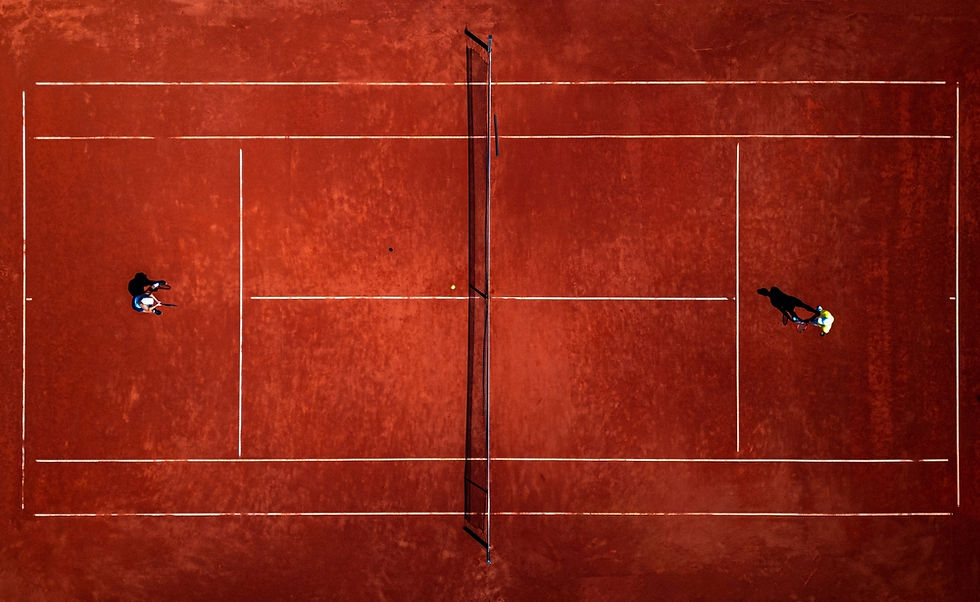
How the sport trains your brain, unlocks creativity under pressure, and elevates sportsmanship — backed by science
Primary SEO Keyword: BDNF and neural pathways in tennis | Long-Tail Keyword: how tennis builds neural pathways through BDNF and sportsmanship
BDNF and Neural Pathways in Tennis
Introduction: Your Brain Is Being Built Every Time You Step on the Court
If you play tennis seriously — or if you coach athletes who do — you already know there's something different about this sport. It isn't just footwork or topspin. It's that thing that happens at 5-4 in the third set when the body is spent but the mind suddenly gets sharper. That clarity isn't coincidence. It's biology.
Tennis is one of the most neurologically demanding sports on earth. Every point demands split-second decisions, pattern recognition, emotional regulation, and creative problem-solving — all simultaneously, all under pressure. That cognitive load is exactly what drives the production of BDNF and neural pathways in tennis, triggering a cascade of brain changes that improve not just how you play, but how you think, compete, and carry yourself on and off the court.
But here's what most players — and most performance coaches — miss: the neural benefits of tennis don't just make you better at tennis. They reshape your capacity to handle adversity, read complex situations, and bring genuine sportsmanship to every match. For soccer players, futsal athletes, or any competitor who wants to sharpen the neural edge, tennis offers a training stimulus that's hard to replicate anywhere else.
Pain Points That Keep Players Stuck:
Struggling to perform when the match pressure spikes — the body tightens, decisions slow, errors multiply
Hitting a mental wall mid-match with no clear way to reset or adapt your game
Feeling like your creativity disappears exactly when you need it most
Understanding sportsmanship intellectually but not knowing how the game actually rewires you toward it
Not knowing what BDNF is or why it matters to your long-term athletic development
If your looking for melodic house combined European elements, with reggaeton or dembow beat, because you are looking for something that is a bit orchestral has some Glockenspiel, and want to experience something different then listen to Podium. You have piano, synth, guitar and more.
Listen/Follow Pavł Polø on Spotify.
1. What Is BDNF — and Why Every Serious Athlete Needs to Know
Brain-Derived Neurotrophic Factor (BDNF) is a protein produced primarily in the hippocampus, cerebral cortex, and cerebellum. Think of it as your brain's construction crew. It promotes the survival of existing neurons, supports the formation of new synaptic connections, and drives neurogenesis — the literal birth of new brain cells. Without adequate BDNF, your brain's ability to learn, adapt, and recover degrades.
Research published in Neural Regeneration Research (2025) confirmed that BDNF enhances synaptic plasticity and promotes the formation of new synapses through long-term potentiation — the molecular mechanism underlying memory and skill acquisition. It binds to the tyrosine kinase B (TrkB) receptor, activating signaling cascades across the brain that accelerate neural efficiency. [Source]
According to a comprehensive review in Frontiers in Neurology (2024), physical exercise — particularly aerobic activity — significantly elevates BDNF levels, especially in young adults. Elevated BDNF has been linked to improved hippocampal volume, enhanced working memory, faster processing speed, and stronger stress response. [Source]
A meta-analysis published in PMC found that a single session of aerobic exercise produces a significant moderate-effect increase in BDNF (Hedges' g = 0.46), while a structured aerobic program raises resting BDNF levels above baseline over time. [Source]
Tennis is aerobic. Tennis is also interval-based, cognitively complex, and socially engaging. That combination triggers BDNF and neural pathways in tennis more powerfully than almost any other physical activity.
🏆 GOLD NUGGET: BDNF Is the Fertilizer for Your Athletic Brain Aerobic exercise like tennis elevates BDNF levels significantly within a single session. Over weeks of consistent play, this raises your baseline BDNF — meaning your brain is more capable of learning new patterns, recovering from stress, and adapting strategy mid-match. This is the biological foundation of elite adaptability. |

2. How Tennis Specifically Drives Neural Pathway Formation
Not all exercise creates neural pathways in the same way. Tennis is unique because it combines aerobic intensity with a continuous stream of novel decisions, spatial demands, and technical refinements. This combination is the engine of neuroplasticity.
A 2025 study published on medRxiv found that long-term tennis training induces measurable efficiency in the visuospatial cognitive cortex of athletes. The research concluded that tennis improves executive functions including working memory and decision-making, reduces cognitive decline risk, and increases brain plasticity — the capacity to reorganize and adapt to new tasks. [Source]
When the ball leaves your opponent's racket, your visual cortex fires. Your motor cortex starts computing the response. Your prefrontal cortex runs rapid strategic simulations. Your cerebellum manages movement precision. This multi-region firing, repeated thousands of times per match and across thousands of matches, physically reshapes those pathways — making them faster, more efficient, more automatic.
Research on perceptual-cognitive training published in the International Journal of Sports Science (2025) confirmed that expert tennis players develop superior pattern recognition and anticipation abilities — they read contextual and kinematic cues (body position, racket angle, ball toss) to predict outcomes before they happen. This is a trained neural skill, not just reaction time. [Source]
For soccer players, this is highly transferable. The same neural systems that read a tennis opponent's body language to anticipate a forehand are the ones that read a striker's hip movement to predict a shot direction.
🏆 GOLD NUGGET: Tennis Trains the Brain Systems That Read the Game Expert tennis players develop a trained neural architecture for reading patterns, anticipating movement, and making sub-second decisions. This isn't luck or talent — it's the result of repeated high-complexity stimulus-response cycles that physically sculpt faster, more precise neural pathways in the cortex, cerebellum, and hippocampus. |
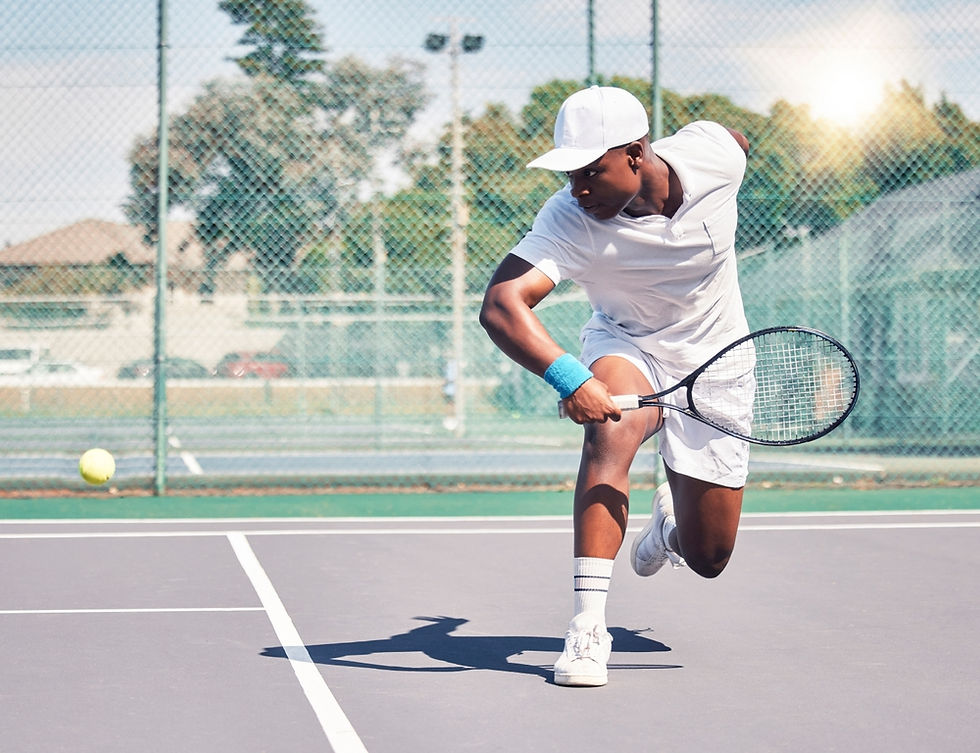
3. Adapting to Changing Match Conditions: How the Brain Updates in Real Time
One of the most underrated skills in tennis — and in sport generally — is the ability to shift your game plan when what you're doing stops working. That isn't stubbornness or flexibility of personality. It's a function of the prefrontal cortex, and tennis trains it directly.
Northwell Health's neuroscience review explains that tennis players must "anticipate their opponent's moves, adapt strategies mid-match, and think several steps ahead" — all tasks that engage and strengthen the prefrontal cortex, the brain's executive planning hub. Regular play builds this area's capacity for problem-solving that extends well beyond the court. [Source]
Tennis also provides a neurologically rich feedback loop. Every point gives you data: how the opponent moved, where they like to place the ball, what shots they struggle to handle. The hippocampus — supercharged by BDNF — encodes these patterns rapidly, allowing strategic adjustments in real time. Players who train consistently develop what researchers describe as a more adaptive cortisol response — meaning they handle stress more efficiently and recover between points faster. [Source]
The interplay between the hippocampus and medial prefrontal cortex is particularly relevant here. Oxford Academic research in Cerebral Cortex (2024) found that these two regions work in tandem when generating and encoding novel ideas — the exact process a player uses when improvising a shot they haven't practiced, or adjusting to an opponent's unexpected game plan. [Source]

4. Removing Pressure: The Neural Mechanism Behind Match Composure
Every tennis player knows the feeling — you're a set up, you're serving for the match, and suddenly your technique disappears. That's not weakness. That's your brain entering a threat-detection state that hijacks your executive function.
Sports psychology research explains that when the brain perceives a high-stakes situation, the fight-or-flight response floods the system with cortisol and adrenaline. Left-hemisphere activity spikes — the analytical, self-monitoring side of the brain — which disrupts the automatic, fluid execution of trained motor programs. This is the neuroscience of choking. [Source]
The good news: the very training that builds BDNF and neural pathways in tennis also builds resistance to this response. Repeated exposure to high-pressure situations during practice — tiebreakers, pressure drills, simulated match scenarios — gradually recalibrates the brain's threat-assessment. The amygdala becomes less reactive; the prefrontal cortex maintains control longer. Research in sports psychology consistently supports this: practicing under pressure reduces anxiety during competitive matches by training the neural circuits that manage emotional regulation. [Source]
The landmark study by Cowden et al. (2016) published in Frontiers in Psychology found that among 351 competitive tennis players, mental toughness was strongly positively correlated with resilience (r = 0.59) and negatively correlated with stress (r = -0.44). The brain's ability to sustain performance under pressure is trainable, and tennis provides the training ground. [Source]
🏆 GOLD NUGGET: Pre-Point Routine as a Neural Reset Elite tennis players use pre-point routines not as superstition, but as deliberate neurological tools. Rituals between points — controlled breathing, a specific bouncing pattern, a physical cue — activate the parasympathetic nervous system and suppress the amygdala's fight-or-flight override. Over time, these routines automate pressure management. Build yours. Practice it. It is a neural skill. |
5. Creativity and Precision on Court: The BDNF-Creativity Link
When Federer threads a between-the-legs winner at full sprint, that isn't just a physical feat. It's a creative act — a novel solution to a complex spatial problem, executed under extreme time and pressure constraints. And creativity, it turns out, runs on the same neural infrastructure that BDNF builds.
Research in Communications Biology (2024) found that divergent thinking — the creative process of generating novel solutions — engages the dorsolateral prefrontal cortex, the ventrolateral prefrontal cortex, and the anterior cingulate cortex. Dopamine, a neurotransmitter directly modulated by exercise and BDNF expression, is a key substrate of this creativity circuitry. [Source]
Tennis, with its endlessly varied spatial problems, serves as a high-repetition creativity workout. No two points are identical. Every rally demands a fresh sequence of decisions. Over time, the brain builds increasingly robust neural networks for generating and executing creative solutions under pressure — not just in tennis, but in any high-stakes cognitive environment.
Aerobic exercise's role in this is critical. According to neuroscience research from Neuroscience News, exercise triggers dopamine, serotonin, and norepinephrine release alongside BDNF — a neurochemical environment that simultaneously sharpens focus and expands creative range. [Source]
For the athlete who feels their best ideas come to them during or just after training: that's not coincidence. It's the BDNF-dopamine system doing exactly what it was built to do.

6. Overcoming a Blockade: When Neural Wiring Gets You Through a Difficult Match
Every competitive player has experienced it — a match where nothing is working. Your shots are going long, your opponent has decoded you, and the momentum has completely shifted. What separates elite players from everyone else in that moment isn't talent. It's neural architecture.
A well-trained brain, fortified by sustained BDNF production, has a critical advantage: it can access stored movement patterns and tactical knowledge even under neurological stress. The hippocampus, strengthened through regular aerobic training, maintains memory retrieval efficiency when cortisol is elevated — allowing a player to recall what's worked before and apply it. This is sometimes called adaptive recall, and it's the neurological foundation of in-match adjustment.
The scoping review published in Sports journal (2025), introducing the Resilience Racket Model, found that competitive tennis players who develop psychological resilience — defined as the ability to effectively negotiate and adapt to significant stressors — outperform less resilient players on critical points and during match comebacks. This resilience isn't passive. It's an active neural process, trained through repeated adversity on the court. [Source]
Research on long-term motor training and decision-making published in PMC (2022) found that expert athletes develop smaller, more focused neural networks for decision-making than novices — which means less cognitive energy wasted on irrelevant information and more available for solving the actual problem in front of them. [Source]
When you're a break down in the third set, a trained brain — fed by consistent BDNF production — activates this optimized decision network automatically. You don't have to think your way out. Your neural pathways carry you.
🏆 GOLD NUGGET: The Neuroscience of the Comeback Research confirms that expert athletes access smaller, more efficient neural decision networks under pressure — meaning they process the situation faster and with less error. The key to unlocking a comeback in a difficult match isn't trying harder. It's trusting the neural pathways you've built, reducing self-monitoring (which activates the left hemisphere and disrupts flow), and returning to your pre-point routine to reset the system. |
7. How Neural Development Drives Sportsmanship, Love of the Game, and Growth
This is where tennis gets interesting beyond performance. Sportsmanship isn't just etiquette. It's a neural phenomenon — and the same brain changes that make you a better player also make you a more principled competitor.
A study cited in a 2024 review published in Sports (Basel) found that adolescent tennis players developed higher ratings of loyalty, closeness, and social competence compared to non-players. The positive relational dynamics built through competitive tennis — trust, respect, conflict navigation — produced measurable prosocial outcomes. [Source]
Social engagement also reinforces the very neural structures that BDNF supports. The prefrontal cortex governs both executive function and social cognition — the systems responsible for perspective-taking, fairness, and emotional regulation in competition. Regular tennis strengthens this cortical region consistently, creating a player who can read the situation more clearly, regulate their frustration more effectively, and compete with more grace.
Tennis also has a built-in accountability mechanism that few other sports match: players call their own lines. This quiet responsibility — making honest calls even when they cost you points — trains the neural and behavioral circuitry of integrity. It's the love of the game expressed through the neurons that govern ethics and self-control.
The Northwell Health neuroscience review noted that consistent play strengthens neural circuits associated with empathy and emotional well-being through both the competitive and social dimensions of the sport — particularly in doubles play and league competition. [Source]
Growth follows from all of this. As BDNF production increases, as neural pathways deepen, as pressure becomes manageable and creativity flows more freely — the game stops feeling like a battle against the opponent and starts feeling like a conversation with the sport itself. That's when the love of the game becomes something permanent.
🏆 GOLD NUGGET: Sportsmanship Is Built in the Nervous System Sportsmanship isn't a personality trait. It's a neural output — the result of a well-regulated prefrontal cortex, a resilient emotional system, and repeated experience with adversity. Every time you make an honest line call, reset after a mistake, or compete hard without losing your composure, you're reinforcing the exact neural circuits that BDNF helps build. The character of your game reflects the architecture of your brain. |
Where Athletes Get Stuck (and What the Science Tells Us):
Players who only train physical skills plateau neurologically — the brain needs complex problem-solving, not just repetition
Competitive anxiety blocks BDNF's cognitive benefits — pressure management must be trained, not hoped for
Athletes who avoid difficult matches lose crucial BDNF-building neural stress exposure
Without social engagement in training, key prefrontal circuits for sportsmanship go unexercised
5 Actionable Steps to Build Neural Pathways Through Tennis
Step 1: Train Aerobically Within Your Tennis Practice BDNF peaks during and immediately after sustained aerobic effort. Structure your sessions so that at least 20–30 minutes involve continuous moderate-to-high intensity movement — baseline rallies, shadow swings, footwork patterns with ball feeding. Research confirms this aerobic window is when BDNF expression surges most dramatically. This is non-negotiable for neural development. |
Step 2: Practice Deliberately Under Pressure Conditions Build tiebreak scenarios, match-point pressure drills, and competitive serve-return games into every weekly session. The brain needs to encounter the high-cortisol, high-stakes environment in training to build the neural resilience that transfers to matches. Research confirms this kind of pressure exposure reduces competitive anxiety and improves clutch-point performance. Keep a journal of how you respond — the data trains your self-awareness as much as the drill trains your execution. |
Step 3: Use Pre-Point Routines to Activate Your Neural Reset System Develop and practice a consistent between-point routine: a breath, a physical cue (bouncing the ball, adjusting strings), and a mental reset word or focus phrase. Over time this routine activates the parasympathetic system automatically, suppressing fight-or-flight responses before critical points. This isn't superstition — it is applied neuroscience. Implement it in practice first, then carry it into competition. |
Step 4: Add Cross-Training With Cognitive Complexity Tennis benefits compound when combined with other cognitively demanding activities — futsal, 3-on-3 basketball, or even chess and tactical video game review. Each novel problem-solving environment adds additional BDNF stimulus and builds broader neural connectivity. For soccer and futsal athletes, alternating between those sports and tennis creates overlapping pattern-recognition demands that sharpen anticipation across all three disciplines. |
Step 5: Play Competitive Matches Regularly and Reflect Afterward Neural pathway formation through tennis requires the full cognitive load of competitive play — not just drilling. Aim for at least one competitive match or high-pressure game session per week. Afterward, spend 5 minutes writing down: one tactical adjustment you made, one moment of sportsmanship (yours or your opponent's), and one creative shot or decision that felt natural. This reflection practice deepens hippocampal encoding of the experience, accelerating learning. |
🏆 GOLD NUGGET: The Long Game — Tennis as a Lifelong Neural Investment A 2020 Lancet Public Health study found that regular racquet sport participation is linked to lower risk of dementia and slower cognitive ageing. The neural pathways you build through tennis today are not just making you a better athlete — they are building a more resilient, creative, and socially intelligent brain that will serve you for decades. Play the long game. |
References & Clickable Sources
1. Neural Regeneration Research (2025) — Effects of exercise interventions on BDNF in children and adolescents. https://journals.lww.com/nrronline/fulltext/2025/05000
2. Frontiers in Neurology (2024) — Impact of physical exercise on BDNF in neurodegenerative disease. https://www.frontiersin.org/journals/neurology
3. PMC — Meta-analytic review of exercise on BDNF (Kohut et al.) — https://pmc.ncbi.nlm.nih.gov/articles/PMC4314337/
4. PMC — Effect of Aerobic Exercise on BDNF in Neurological Populations — https://pmc.ncbi.nlm.nih.gov/articles/PMC5625797/
5. medRxiv (2025) — Tennis: The Sport for Life. Neuroplasticity and Cognitive Stimulation — https://www.medrxiv.org/content/10.1101/2025.03.21.25324353v1.full
6. Northwell Health / Nuvance Health (2024) — Tennis for Brain Health: Neuroscience of Precision and Flow — https://www.nuvancehealth.org/health-tips-and-news/the-neuroscience-of-tennis-for-brain-health
7. Frontiers in Psychology (2016) — Mental Toughness in Competitive Tennis: Resilience and Stress (Cowden et al.) — https://pmc.ncbi.nlm.nih.gov/articles/PMC4791384/
8. Sports (2025) — The Mental Game of Tennis: Scoping Review and Resilience Racket Model — https://doi.org/10.3390/sports13050130
9. Sports Psychology Tennis — Overcoming Mental Blocks in Tennis — https://www.sportspsychologytennis.com/overcome-mental-blocks-in-tennis/
10. TennisHead — Renowned Psychologist Discovers Cure for Tennis Choking — https://tennishead.net/exclusive-renowned-psychologist-discovers-cure-for-choking-under-pressure-during-tennis-matches/
11. Communications Biology (2024) — Neural, Genetic, and Cognitive Signatures of Creativity — https://www.nature.com/articles/s42003-024-07007-6
12. Neuroscience News — Exercise and the Brain (2023) — https://neurosciencenews.com/fitness-neuroscience-23228/
13. Cerebral Cortex / Oxford Academic (2024) — Hippocampus and mPFC in Creative Idea Recognition — https://academic.oup.com/cercor/article/34/5/bhae219/7682115
14. SAGE Journals (2025) — Perceptual-Cognitive Training and Anticipation in Tennis Serve Return — https://journals.sagepub.com/doi/10.1177/17479541251346119
15. PMC / Sports (Basel) (2024) — Sporting Mind: Physical Activity and Psychological Health — https://pmc.ncbi.nlm.nih.gov/articles/PMC10819297/
16. PMC (2022) — Neural Mechanism of Long-Term Motor Training and Decision-Making — https://pmc.ncbi.nlm.nih.gov/articles/PMC9062593/
17. ScienceDirect (2024) — Beneficial Effects of Exercise on BDNF and Limbic System Neurodegeneration — https://www.sciencedirect.com/science/article/pii/S0531556524001815
Research compiled from peer-reviewed journals, neuroscience institutions, and sports science publications. All links verified June 2026.


Comments