
Ways Cross-Training in Road Cycling, Trail Running, and Kayaking Transforms Soccer and Tennis Athletes
Primary Keyword: cross-training for soccer and tennis athletes | Long-tail SEO: how cross-training improves athletic performance in soccer and tennis

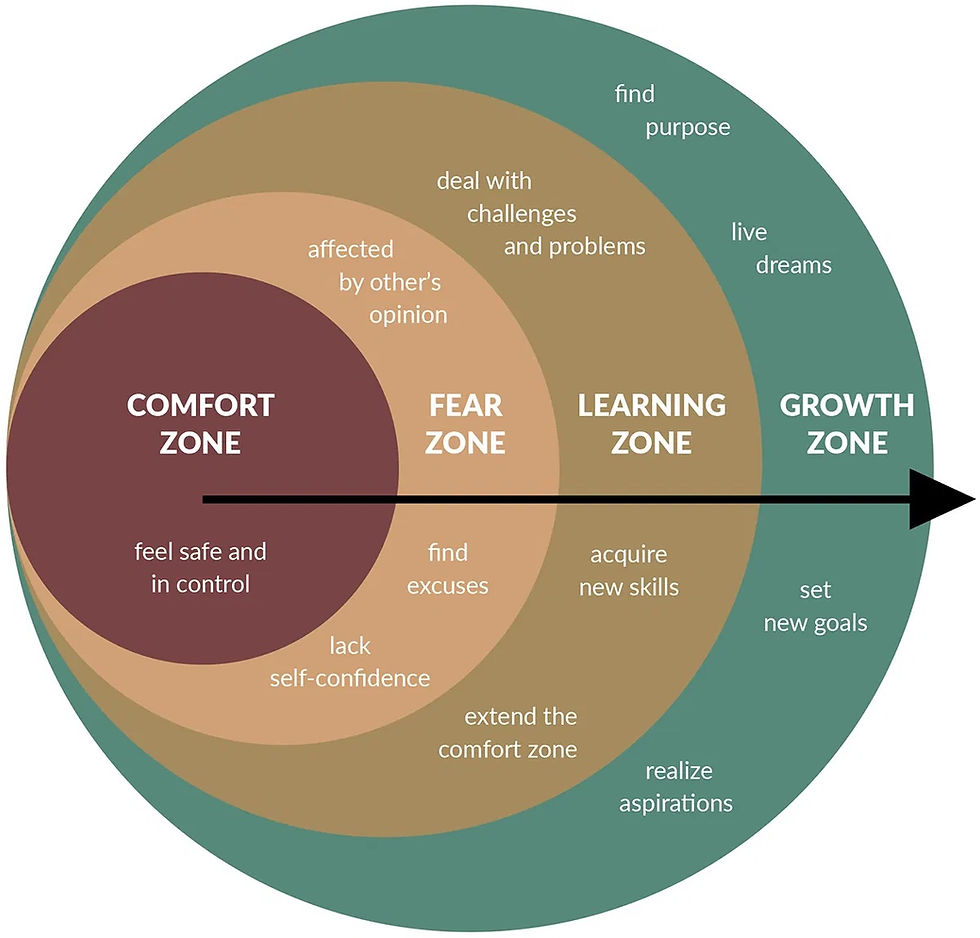
What’s important is that you find an enviroment with clean air, lakes, trails, mountains, and level up. You strive to develop your own unique plan tailored to improvement and performance. The pictures here are the Pyrenees bordering France/Spain. What keeps people back is the comfort zone, its’ like the Grade F for being stagnant if you are there for too long and not learning or growing or facing personal adversity/setbacks.
It’s like doing poorly in school, and just like in life the comfort zone holds you back when you are there for too long.
Introduction
Most soccer players and tennis athletes train hard. The problem? They train the same muscles, the same patterns, the same energy systems — day after day, season after season. The body adapts, performance plateaus, and overuse injuries become a matter of time. Sound familiar?
Here's the real pain behind single-sport training:
Repetitive stress injuries pile up — knee tendinopathy in soccer, shoulder impingement in tennis
Mental burnout sets in when you're running the same drills, the same sprints, the same patterns
Whole muscle groups get ignored — the glutes, deep core stabilizers, rotational hip muscles
Motivation drops because the sport stops feeling fresh
Knowledge deficits grow: the athlete can execute, but can't adapt, improvise, or tap into cross-sport motor patterns
The solution isn't a new training program within the sport. It's stepping into the growth zone — that place just outside familiarity where adaptation actually happens. According to PositivePsychology.com, coined from management thinker Judith Bardwick's 1991 work, the comfort zone is "a behavioral state within which a person operates in an anxiety-neutral condition, using a limited set of behaviors to deliver a steady level of performance, usually without a sense of risk." For an athlete, that's the plateau zone — and it's exactly where development stalls.
The growth zone model — moving through Fear → Learning → Growth — applies directly to athletic development. Adding road cycling, trail running, and kayaking to your weekly schedule is one of the most effective ways to execute this model in practice. This guide breaks down why, how, and who's already doing it.
If your looking for melodic house combined European elements, with reggaeton or dembow beat, because you are looking for something that is a bit orchestral has some Glockenspiel, and want to experience something different then listen to Podium. You have piano, synth, guitar and more.
Listen and Save on Spotify.
The Comfort Zone Problem in Soccer and Tennis Development
The Yerkes-Dodson Law — established in 1907 — shows that performance improves with a moderate level of arousal and challenge, but stagnates when an athlete stays too comfortable or becomes overwhelmed. This curve applies directly to training design. PositivePsychology.com notes that the process of moving through the growth zone isn't linear: "peaks, troughs, and plateaus often complicate the journey." The same is true for athletic development.
For soccer and tennis athletes specifically, the knowledge deficits created by single-sport training include:
Proprioceptive gaps: The body knows how to move on grass or a hard court — but put it on an uneven trail or in a kayak, and stability systems are completely underprepared
Rotational power deficits: Soccer emphasizes linear and lateral movement; tennis emphasizes arm-dominant rotation. Neither sport systematically trains the full 360-degree hip and trunk rotation chain
Cardiovascular monotony: Aerobic adaptation plateaus when the same cardio stimulus is applied repeatedly. Different sports stimulate different energy pathways
Mental resilience gaps: Athletes conditioned only in their primary sport often struggle with novel competitive pressure and adaptability
The antidote is structured cross-training for soccer and tennis athletes — specifically through three outdoor activities that punch far above their weight.

Road Cycling: Building the Engine Without Breaking the Machine
Road cycling is one of the cleanest aerobic development tools available to a soccer or tennis athlete. It's low-impact, highly scalable, and targets the exact muscle groups — quadriceps, hamstrings, glutes, hip flexors — that both sports depend on, but without the joint loading of running.
According to BikeRadar, cycling is particularly effective at improving functional fitness, joint health, and cardiovascular endurance while giving the soft tissues and tendons critical recovery time. For soccer players logging heavy pitch time, this matters enormously.
What road cycling develops that soccer and tennis often miss:
Sustained aerobic capacity: Cycling at 70-85% of max heart rate for 60-90 minutes builds the aerobic base that fuels late-game acceleration in soccer and multi-set performance in tennis
Glute activation and quad strength: Pushing through a long climb develops the posterior chain in ways that sprinting doesn't — addressing the quad dominance that causes ACL vulnerabilities in soccer players
Active recovery stimulus: A 45-minute low-intensity ride on a rest day moves metabolic waste, reduces muscle soreness, and promotes blood flow without creating additional central fatigue
Mental freshness: Riding a road bike through new terrain engages the brain in navigation, pacing, and environmental reading — a cognitive reset from sport-specific drills
Ronaldo's protocol confirms this: documented training data shows Cristiano Ronaldo uses cycling as a regular active recovery and cardiovascular maintenance tool alongside his HIIT and sprint work. His body fat sits at approximately 7% with muscle mass comprising around 50% of his total body weight — a physical standard built on training diversity, not singular focus.
Trail Running: The Body's Instability Lab
If road cycling is the engine builder, trail running is the neurological recalibrator. Running on uneven terrain — roots, rocks, inclines, descents — forces rapid-fire motor decisions that no flat-surface sport can replicate.
Polar's cross-training analysis describes trail running's mixed terrain as developing an increased range of motion while activating a broader range of muscle groups than traditional running. Dirt and sand surfaces also reduce joint impact, decreasing overall soreness and injury load — a key consideration for athletes already absorbing heavy match schedules.
Specific benefits for soccer and tennis athletes:
Ankle stability and proprioception: Uneven terrain forces constant micro-adjustments from the ankle stabilizers — the exact muscles that absorb directional change loads in both sports
Hip abductor and adductor development: Lateral trail features and uphill running engage the hip abductors and adductors in patterns soccer training doesn't systematically reach
Cardiovascular ceiling elevation: Elevation gain during trail runs drives VO2 max improvements; research shows altitude cardio stimulus adapts the body in ways flat running doesn't
Mental toughness: Trail running requires consistent decision-making under fatigue — a direct transfer to late-game execution in soccer and deciding shot selection in a critical tie-break
Importantly, trail running addresses a specific cross-training for soccer and tennis athletes knowledge gap: the ability to process spatial information quickly and adjust body mechanics in real time. This translates directly to a midfielder reading a changing defensive shape or a tennis player tracking an opponent's court positioning.

Kayaking: The Rotational Power Unlock
Here's the activity most soccer coaches and tennis coaches aren't prescribing — and arguably the one with the highest upside for sport-specific carryover.
Cyclist.co.uk's expert analysis specifically calls out kayaking and stand-up paddle boarding as the top activities for rotational movement development — "targeting areas of the body that don't typically get much focus." The rotational chain — thoracic spine, obliques, serratus anterior, hip rotators — is the power chain behind a tennis serve, a soccer cross, and a struck ball from distance. Kayaking develops it without any joint loading whatsoever.
What kayaking uniquely delivers:
Thoracic rotation mobility: The paddle stroke demands full thoracic rotation — the same movement source that drives serve velocity in tennis and struck-ball power in soccer
Lat and upper back development: Paddle resistance builds the lats, rear deltoids, and rhomboids — muscles that provide upper body stability and protect shoulder joints from the repetitive overhead demands of tennis
Core anti-rotation strength: Maintaining a stable kayak while paddling trains the anti-rotation function of the obliques and deep spinal stabilizers — essential for absorbing contact in soccer and maintaining form through a long rally
Bilateral symmetry: Both sides of the body work equally, correcting the asymmetry patterns that years of dominant-side sports (especially tennis) create
The mental dimension matters here too. Kayaking on open water or rivers demands present-moment attention and environmental reading — a low-stress way to build focus and calm that carries over into competitive settings.

The Body in a State of Flux: Why Variety Is the Mechanism
The physiological principle at work here is muscle confusion — or more accurately, varied stimulus-driven adaptation. When the body faces a new mechanical demand, it recruits new motor units, builds new neuromuscular pathways, and triggers adaptation in systems that had gone quiet from repetition.
UCHealth's orthopedic research team warns that single-sport specialization "increases the risk of overuse of certain muscles — shoulder muscles in baseball players or knees in soccer players." Dr. Adam Wilson, an orthopedic surgeon, emphasizes: "For longevity's sake, cross-training in multiple sports is integral to maintaining peak muscle and joint health."
The body kept in a state of flux through cross-training for soccer and tennis athletes gains several systemic advantages:
Connective tissue is conditioned from multiple angles, reducing single-plane overload failure
Cardiovascular adaptation occurs across aerobic and mixed energy systems — both soccer and tennis require rapid transitions between aerobic and anaerobic states
Neuromuscular freshness is maintained: the nervous system doesn't habituate to a single movement pattern, keeping it responsive and adaptive
Hormonal balance: varied training modulates cortisol and testosterone more effectively than monotonous training, supporting better recovery and body composition
Frontiers in Sports Science research (2024) confirms that resistance and cross-training interventions in elite athletes produce significant improvements in sport-specific performance outcomes — including speed, agility, and power — precisely because they stress systems beyond what the primary sport addresses.
Real Athletes, Real Data
Cristiano Ronaldo — Soccer
Documented training protocols show Ronaldo uses 30-45 minutes of swimming during congested fixture periods for low-impact aerobic maintenance, stationary cycling for active recovery, and 10 x 30m sprints at 95% effort for explosive conditioning. His 7% body fat and career longevity past 40 are a direct product of training diversity — his body never fully adapts to a single system.
Novak Djokovic — Tennis
Djokovic's training regimen is a masterclass in cross-training application. Multiple sources confirm he uses cycling for warm-up and light cardio, yoga and tai chi for flexibility and hip stability, and structured mindfulness practice to enhance on-court focus. He has credited yoga specifically with strengthening his hips and lower back — the same structures kayaking and trail running develop. Djokovic has held the World No. 1 ranking for a record total of weeks, a longevity that reflects his willingness to operate outside the conventional tennis training comfort zone.
Rafael Nadal — Tennis / Soccer Background
Nadal famously grew up playing soccer as his primary sport, even competing in the Balearic junior league. We Are Tennis documented that many ATP professionals developed exceptional footwork because of early soccer participation. Nadal's legendary clay-court movement — the split-step timing, the lateral push-off, the explosive directional change — bears the fingerprints of a multi-sport background.
The Broader Coaching Evidence
Trainers at elite tennis academies confirm the pattern. Rochester Athletic Club's coaching staff report that professional tennis players from outside the US who played soccer as youth consistently demonstrate superior footwork. The coaches conclude: "Multiple-sport athletes also stay physically and mentally fresher."
Why Individual Motivation Goes Up When You Leave Your Primary Sport
There's a psychological mechanism that most coaches underestimate. According to PositivePsychology.com's comfort zone research, leaving the comfort zone "fosters self-actualization, a growth mindset, and greater self-efficacy." Translated for an athlete: when you face a new physical challenge — a hard kayak paddle, a mountain trail run, a long road cycling climb — and you survive it, your confidence in your own capacity expands.
The motivational dynamics of cross-training include:
Escape from performance pressure: A road cyclist doesn't need to be a great soccer player. The relief from judgment and expectation allows genuine exploratory effort — the same mindset that produces breakthrough performances
Fresh goal-setting: Chasing a trail running distance personal record or a kayaking route completion provides short-cycle motivation feedback that the long soccer or tennis season doesn't offer
Novelty-driven dopamine: New challenges produce genuine reward-circuit engagement, making training feel purposeful rather than obligatory
Team transfer: Returning to primary sport training with physical freshness and a charged motivation baseline — both individual performance and team energy benefit
Pivotal Motion Physiotherapy's research review specifically notes that cross-training "prevents boredom" and provides "fresh challenges" that "reignite enthusiasm and drive." For a 16-year-old soccer player grinding through preseason, that's not a minor benefit — it's the difference between showing up fully engaged or going through the motions.

5 Gold Nuggets: What Most Athletes Miss About Cross-Training
Gold Nugget #1 — The Rotation Gap: Soccer and tennis both depend on rotational power but neither trains it systematically. Kayaking directly builds thoracic rotation and oblique strength through the same movement arc that produces strike power and serve velocity. Add one kayaking session per week in the off-season and watch ball-strike power improve.
Gold Nugget #2 — Trail Running Is Neurological Training: Every uneven step on a trail fires motor neurons that flat-surface training leaves dormant. These are the same neurons that fire when a midfielder cuts around a defender or a tennis player adjusts for a skidding ball. Trail running doesn't just build legs — it sharpens the reactive system that makes elite movement possible.
Gold Nugget #3 — Cycling Is the Best Active Recovery Tool in the Arsenal: The research is clear: low-intensity cycling on rest days accelerates recovery without adding stress load. Soccer players who ride 45 minutes at 65% heart rate on non-training days report less delayed onset muscle soreness and higher output in the following session. Ronaldo built a career on this principle.
Gold Nugget #4 — The Growth Zone Is a Physical Place: Leaving the comfort zone isn't just a mindset concept — it's a physiological mechanism. When you introduce road cycling into a soccer training block, you physically force the cardiovascular and muscular systems to respond to unfamiliar demands. Adaptation follows. That adaptation makes you a better soccer and tennis athlete — not despite the unfamiliar training, but because of it.
Gold Nugget #5 — The Multi-Sport Athlete Has a Hidden Advantage: Research across elite sports consistently shows that athletes who played multiple sports in development have longer careers, lower injury rates, and higher competitive ceilings. The knowledge transfer — body awareness, spatial reading, motor variety — compounds over time. It's never too late to start building that portfolio.
5 Actionable Steps for Athletes and Students to Take Right Now
Step 1: Audit your training for repetition overload. Count how many sessions per week involve the exact same movement pattern — same surface, same direction, same drill. If it's more than 70% of your volume, you're in the comfort zone. Identify one slot per week to replace with a different activity.
Step 2: Schedule one road cycling session per week, minimum. It doesn't need to be a 3-hour gran fondo. A 45-60 minute moderate-intensity ride at 70-80% max heart rate, done consistently, will build aerobic capacity, accelerate recovery, and protect your knees and hips over a full season.
Step 3: Start trail running with purpose. Begin on mild trail terrain and increase gradient over four weeks. Focus on landing mechanics and foot placement — not pace. Two trail sessions per week during the off-season is sufficient to produce proprioceptive and cardiovascular gains that show up on the pitch and court.
Step 4: Try a kayaking or paddling session once a month. It doesn't need to become a primary training modality. Even monthly exposure to rotational paddle resistance will open up thoracic mobility and build the posterior shoulder chain — addressing the exact asymmetries tennis players and soccer strikers accumulate over years of dominant-side use.
Step 5: Track motivation and freshness, not just performance metrics. Keep a simple weekly log of your motivation level (1-10) and physical freshness (1-10) alongside your performance data. Most athletes who add structured cross-training see motivation scores increase within 4-6 weeks. That data makes the case to coaches and programs who are skeptical of time away from primary sport training.
The Bottom Line
The most complete athletes in soccer and tennis aren't the ones who spent the most hours on a single surface. They're the ones who moved through the growth zone — who embraced the fear of doing something unfamiliar, survived the learning curve, and came back to their primary sport with a body and mind recalibrated at a higher level.
Road cycling, trail running, and kayaking aren't distractions from soccer and tennis development. They're the mechanism that breaks plateaus, prevents overuse injury, develops ignored muscle chains, and keeps motivation — the fuel behind every elite performance — burning hot.
The comfort zone feels safe. The growth zone is where you become the athlete you want to be.
References and Further Reading
1. Page, O. (2020). How to Leave Your Comfort Zone and Enter Your Growth Zone. PositivePsychology.com. [Read Article]
2. Bardwick, J. (1991). Danger in the Comfort Zone. AMACOM. (Original source of "comfort zone" definition)
3. Yerkes, R.M. & Dodson, J.D. (1908). The Relation of Strength of Stimulus to Rapidity of Habit-Formation. Journal of Comparative Neurology and Psychology.
4. UCHealth. (2025). Importance of cross-training for athletes of all ages. [Read Article]
5. BikeRadar. (2026). 7 cross-training benefits that will make you a more rounded rider. [Read Article]
6. Polar Blog. (2023). 3 Popular Outdoor Sports for Cross-Training. [Read Article]
7. Pivotal Motion Physiotherapy. (2025). Benefits of Cross-Training for Athletes. [Read Article]
8. Routines.club. (2026). Cristiano Ronaldo Workout Routine. [Read Article]
9. Champ Workouts. (2024). Mastering the Game: An In-Depth Look at Novak Djokovic's Training Routine. [Read Article]
10. We Are Tennis. (2014). Why do tennis players like football so much? [Read Article]
11. Rochester Athletic Club. (2024). What I Have Learned Training Elite Tennis Players. [Read Article]
12. Cyclist.co.uk. (2024). What other sports will help my cycling? [Read Article]
13. Frontiers in Sports Science / PMC. (2024). The Effects of Resistance Training on Sport-Specific Performance of Elite Athletes. [Read Journal Article]
14. BMC Sports Science, Medicine and Rehabilitation. (2025). Effects of neuromuscular training on tennis players: a systematic review and meta-analysis. [Read Journal Article]
15. Dweck, C. (2008). Mindset: The New Psychology of Success. Ballantine Books.


Comments