
THE NEUROMARKETING OF FERRARI: How the Prancing Horse Sells a Feeling, Not Just a Car

There is a reason a poster of a Ferrari captured more childhood daydreams than almost any other object on earth, and it has very little to do with horsepower. It has to do with neuromarketing of Ferrari — the discipline of understanding what the brain and body actually do before a person ever signs a check. Ferrari is arguably the finest living case study of neuromarketing in action, and any businessperson, founder, or student serious about brand-building owes it a close look.
Before we get into the Prancing Horse, consider the frustrations most business owners actually live with:
You've built a genuinely excellent product, but it still gets shopped on price.
Your marketing lists features, while a competitor's marketing sells an identity.
Customers admire your work but don't feel a pull to own it.
You have no idea which sensory details — color, sound, imagery — are actually shaping perception.
You assume brand psychology is only for billion-dollar companies.
Ferrari's playbook proves otherwise. The same principles of neuromarketing that move a six-figure supercar can move a fifty-dollar product, once you understand the mechanics underneath them.
If your looking for an escape and are looking for melodic EDM music with that European/Mediterranean/Balkan sound and you need a track for summer, traveling, self development, and overcoming personal adversity then listen to Bay of Kotor. It has accordion, chords, orchestral chords, guitar and more.
When creating music, its about crafting a quality song that does not follow a trend but something that represents change through timelessness.
Listen/Follow Pavł Polø on Spotify.
Neuromarketing of Ferrari:
What Ferrari Projects, and Why People Want It
Ferrari sells status, aspiration, and rebellion long before it sells transportation. Brand researchers place Ferrari squarely inside the "rebel/hero" archetype, arguing that archetypes create bonds that outlast any single product feature because they tap into identity rather than specification (Kantar). A recent academic study on the brand adds that this pull is cultivated early — through films, posters, and childhood imagery — so desire is installed years, sometimes decades, before a customer can ever afford the car (IJFMR).
This is the essence of applied neuromarketing: it does not try to convince the rational, comparison-shopping brain. It speaks to the emotional brain, which forms the association "Ferrari equals arrival" long before logic ever gets a vote.
GOLD NUGGET — Identity Before Income: Ferrari plants the seed of desire in childhood, decades before most fans can afford the car — proof that the strongest brand loyalty is built on identity, not transaction.

What Actually Sells Ferrari: Engineering Meets Art
Enzo Ferrari, the company's famously stubborn founder, once said the most beautiful car is simply "the one that wins." Yet he also admitted that partnering with the design house Pininfarina was the best decision of his career (Collecting Cars). That tension is the whole story. Ferrari is not sold by engineering alone, and it is not sold by styling alone — it is sold at the intersection, where a car that wins races on Sunday also looks like sculpture in a driveway on Monday. Strip out either half and the spell breaks.

The Methods: How Ferrari Brings People In
Ferrari's central tool is manufactured scarcity. The company could build more cars than it does; it deliberately chooses not to, extending waiting lists and, for certain limited models, requiring a purchase history or dealer relationship before a customer can even buy one (Ottobix). Behavioral economists such as Cialdini and Ariely have shown that scarcity triggers FOMO and inflates perceived value even when nothing about the underlying product has changed (Ottobix). Formula 1 racing supplies the second method: it functions as a permanent, global proof-of-performance campaign, feeding Ferrari's mythology to hundreds of millions of viewers every season without ever reading as an advertisement.
The Sensory Cues That Hone the Message Home
This is where neuromarketing gets granular. Ferrari engineers nearly every sensory touchpoint on purpose:
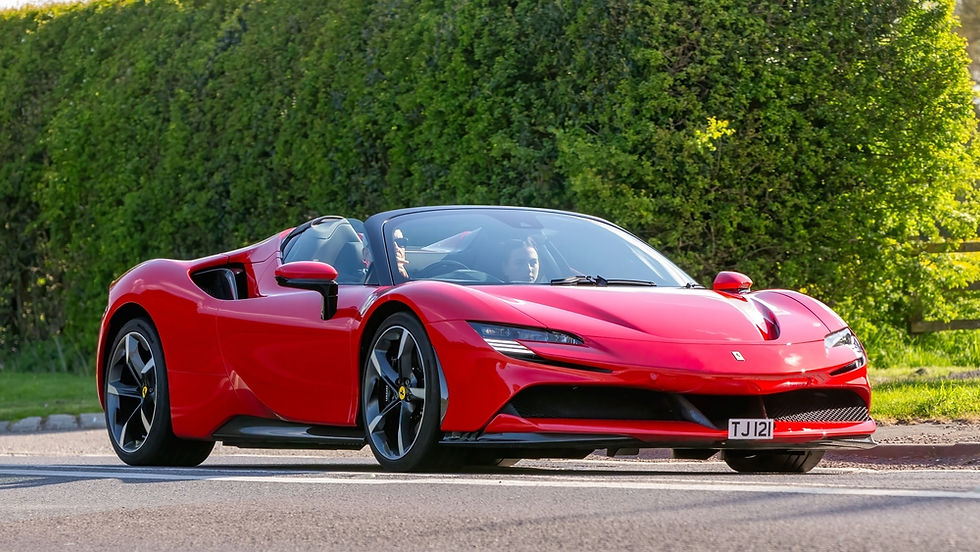
Color — Rosso Corsa red is not a paint choice; findings on color and physiology show red measurably raises heart rate and the perception of excitement, and Ferrari treats it as a strategic asset rather than decoration (Ottobix).
Sound — Ferrari's acoustic engineers tune exhaust geometry and materials specifically to shape the engine note. Senior Acoustic Engineer Francesco Carosone has said plainly that "Ferrari has an authentic sound other car companies want to create artificially," and the company now uses a Brüel & Kjær NVH simulator to digitally fine-tune that sound before a physical engine even exists (Ferrari Lake Forest).
Symbol — The Prancing Horse logo carries a real historical story rooted in World War I aviator Francesco Baracca, giving the mark a weight that an invented symbol could never carry (Ottobix).
Video and imagery — Ferrari's campaigns lean on cinematic tracking shots, motion, and motorsport footage rather than static spec sheets, so the viewer's brain encodes speed and emotion instead of numbers.
GOLD NUGGET — Sensory Consistency: Ferrari's red, its engine note, and its logo are never left to chance — each one is deliberately engineered to fire the same emotional response every single time, which is exactly why the brand is instantly recognizable in a single frame.
Why Neuromarketing Can't Do It All
Here is the part often missed: neuromarketing is an amplifier, not a substitute. If Ferrari's engines were unreliable or its cars fell apart, no amount of red paint or exhaust tuning would rescue the brand. The sensory cues work precisely because they are backed by decades of Formula 1 engineering transfer and genuine performance. Ferrari's own engineering team frames its authentic sound as something competitors try, and fail, to fake artificially (Forbes). The lesson for any brand: sensory storytelling can open the door, but only real quality keeps the customer inside.
GOLD NUGGET — The Amplifier Rule: Neuromarketing did not invent Ferrari's desirability — it amplifies a genuinely excellent product. Applied to a weak product, the same techniques only speed up disappointment.
The Pininfarina Collaboration
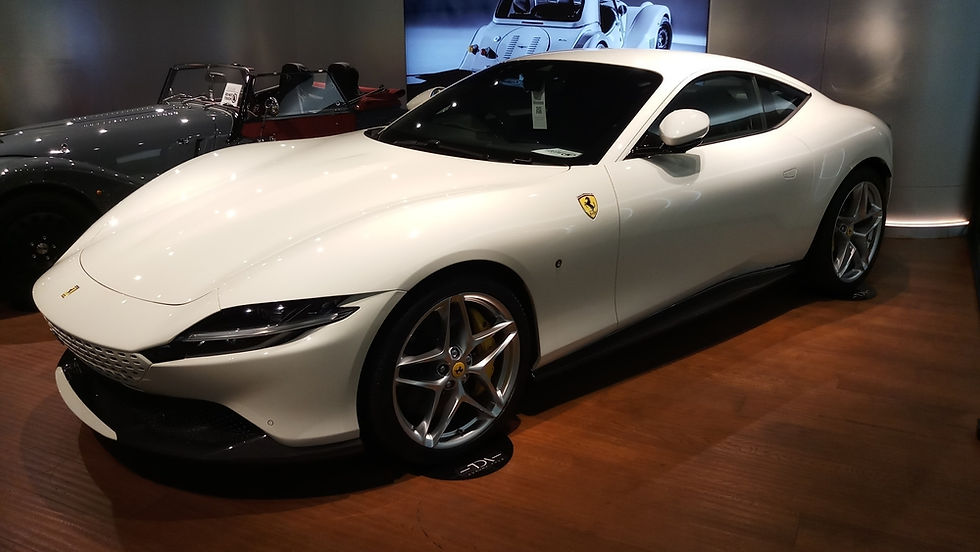
No discussion of Ferrari's brand is complete without Pininfarina, the design house that shaped nearly every Ferrari road car for more than sixty years. The alliance began in 1951 at a neutral restaurant in Tortona, chosen because neither Enzo Ferrari nor Battista "Pinin" Farina would agree to visit the other's factory first (Ferrari Magazine). From the 212 Inter in 1952 through icons like the 250 GT Lusso, the Testarossa, and the Enzo, Pininfarina translated Ferrari's racing engineering into sculptural, emotionally resonant forms (Supercars.net). The partnership wound down between 2011 and 2017 as Ferrari built its in-house Centro Stile design studio, beginning with the LaFerrari (HotCars). Pininfarina's real contribution was never just styling — it was translating engineering into the visual language neuromarketing needs to work: an instantly recognizable silhouette the brain can identify from a single glance.
GOLD NUGGET — The Tortona Meeting: Two proud companies nearly never partnered at all, because neither founder would visit the other's factory first — the compromise, a neutral restaurant, produced sixty years of the most recognizable car silhouettes in history.
What This Means for Growing Your Own Brand
Few businesses will ever have Ferrari's budget, but the underlying principles of neuromarketing scale down cleanly. Consistency of sensory cues, a believable scarcity story, an emotional archetype, and, above all, a product that earns the story are available to any founder willing to be disciplined about them.
Five Actionable Steps You Can Take Today
1. Pick one archetype and commit to it. Decide whether your brand is the rebel, the caregiver, the expert, or the explorer, then let every piece of copy and imagery reinforce that single identity.
2. Choose one signature sensory cue. A specific color, sound, packaging texture, or unboxing detail that customers associate only with you, used with zero exceptions.
3. Make scarcity real, not fake. Limited runs, waitlists, or seasonal drops work only when the limitation is genuine; customers can feel manufactured urgency instantly.
4. Protect product quality before you spend on marketing. No sensory cue survives a product that disappoints, so fix craftsmanship first and amplify it second.
5. Tell the founder's origin story honestly. Ferrari's mythology rests on Enzo's real obsession with racing; find and tell the true, specific story behind your own work rather than a generic mission statement.
Ferrari did not become the world's most desired car brand through advertising tricks. It became that brand by pairing genuine engineering with a disciplined, decades-long application of neuromarketing — consistent sensory cues, real scarcity, and a story people wanted to belong to. That formula, scaled to fit, is available to anyone serious about building something people don't just buy, but want.
References
Chasing Red — The Ferrari Brand (IJFMR) — https://www.ijfmr.com/papers/2025/6/62986.pdf
The Ferrari Case: Scarcity and Selection Strategy (Ottobix) — https://www.ottobix.com/en/the-ferrari-case-how-scarcity-and-selection-create-desire/
Difference That Lasts: What Ferrari Teaches Us (Kantar) — https://www.kantar.com/north-america/inspiration/brands/difference-that-lasts-what-ferrari-teaches-us-about-enduring-brand-power
The Distinctive Sound of a Ferrari (Ferrari Lake Forest) — https://www.ferrarilakeforest.com/ferrari-engine-sound/
Ferrari's Audio Branding Dilemma (Forbes) — https://www.forbes.com/sites/rogerdooley/2024/03/21/ferraris-audio-branding-dilemma/
Pure Pinin: Master of Design (Ferrari Magazine) — https://www.ferrari.com/en-US/magazine/articles/pure-pinin-master-of-design
Pininfarina (Supercars.net) — https://www.supercars.net/blog/all-brands/pininfarina/
Design Chronicles: Ferrari and Pininfarina's Italian Divorce (Collecting Cars) — https://collectingcars.com/articles/design-chronicles-ferrari-and-pininfarinas-italian-divorce
The Real Reason Ferrari and Pininfarina Stopped Collaborating (HotCars) — https://www.hotcars.com/real-reason-ferrari-pininfarina-stopped-collaborating/


Comments