
COST OF LIVING IN TENERIFE: The Insider's Guide to Cost, Culture & Quality of Life on Spain's Atlantic Island
Updated June 2026 | Fact-Checked

Tenerife cost of living isn't a question you Google once and forget. It's the number that either changes your life or sends you back to your overcrowded city. If you're the kind of person who drives something that handles well, appreciates craftsmanship, and doesn't settle for average — you're already wired to see what most people miss about this island. Tenerife sits 300 kilometres off the coast of West Africa, floats under a near-permanent sun, and operates under a tax regime that'll make your accountant raise an eyebrow. It's not just a holiday. For a growing number of smart movers, it's the smartest relocation decision they ever made.
But before you load the car onto the ferry, here's what the brochures won't tell you:
Island supply chains push certain goods — especially imported specialty products — significantly above mainland prices
The rental market has tightened hard, with average prices rising 12.8% in 2025 alone
Local wages average around €1,600–1,900/month, meaning you need external income to thrive here
Bureaucracy moves at its own pace; residency paperwork, NIE applications, and utility setup will test your patience
No ride-hailing apps operate on the island — a car is not optional, it's essential
None of that is a dealbreaker. Context is everything. Let's get into the numbers.
Looking for Music for self-development, going through life, traveling, and enjoying life. 🇵🇱 — Muzyka na samorozwój, jak osoba idzie przez życie, podróże, i jak osoba docenia życie.
Listen/Follow Pavł Polø on Spotify.
What It Actually Costs to Live in Tenerife
A single person living well — not scraping by, but eating right, getting out, and keeping the tank full — needs roughly €1,300–1,900 per month excluding rent, according to Numbeo's cost-of-living data. Add housing and you're looking at €1,800–2,800 for a comfortable solo setup, or €2,500–4,000 for a couple.
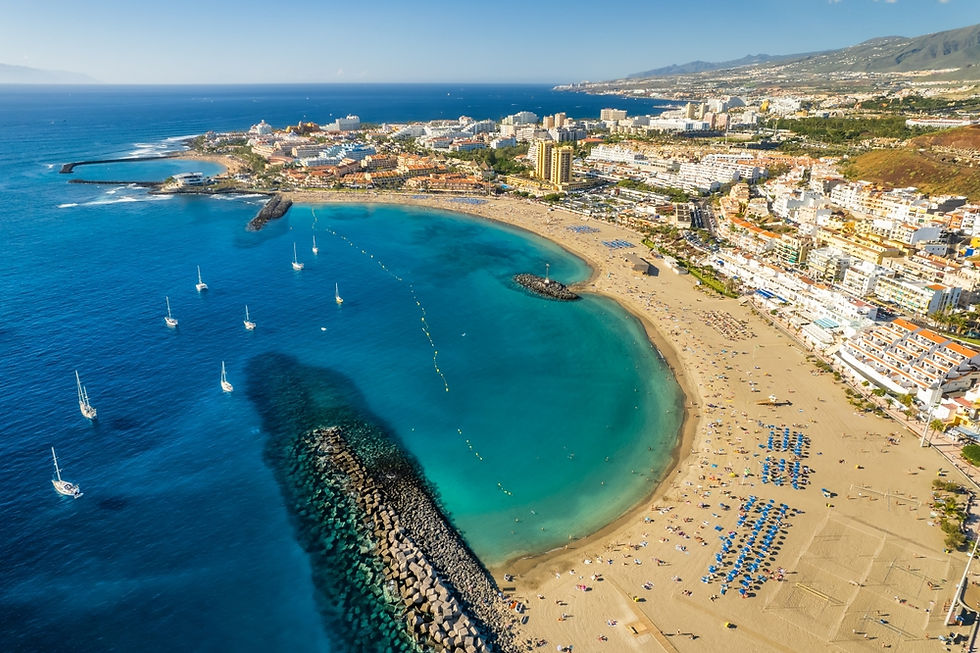
Housing is the biggest variable. A 1-bedroom apartment in a local town like La Laguna or Santa Cruz runs €600–900/month in the city centre, or €450–700 outside it. Head south to Costa Adeje or Playa de las Américas — the island's glossy resort belt — and a 3-bedroom can push €1,800/month. Luxury villas on the south coast run €2,500–8,000+. Property to buy averages €3,292/m² across the province, though Adeje sits at €4,485/m² and cheaper northern towns like Icod de los Vinos drop to €1,368/m².
Food stays refreshingly cheap if you shop like a local. Monthly groceries for one run €200–350. A set-lunch menú del día in a neighbourhood restaurant is €10–15 for three courses including a drink — one of Spain's best-kept budget secrets. Skip tourist-trap restaurants and eat at guachinches — traditional Canarian wine-house eateries serving home cooking at prices that feel almost criminal by European standards.
Utilities for an 85m² apartment land between €50–120/month. Fibre internet (300 Mbps) costs €30–50. An all-in monthly budget for a single professional — rent, food, transport, utilities, going out — sits realistically at €1,800–2,500, closer to €1,500–1,800 if you live in the north and avoid tourist zones.
💡 GOLD NUGGET: The IGIC Advantage Tenerife operates under the Canary Islands' own indirect tax — IGIC — set at just 7%, compared to mainland Spain's 21% IVA. This meaningfully reduces the cost of services, goods, and business operations. For anyone spending or building here, it's a structural savings advantage built directly into the economy. |

Tenerife vs. Mainland Spain vs. the United States
Compared to Madrid or Barcelona, Tenerife is measurably cheaper — roughly 15–20% lower on day-to-day expenses, with significantly lower property prices outside premium zones. Madrid's average rent for a 1-bedroom apartment in the city centre runs €1,200–1,700, versus €600–900 in Santa Cruz de Tenerife.
Compared to the United States, Tenerife is approximately 29% cheaper overall, with restaurant meals running around 39% less than equivalent US dining. Tenerife is 58% cheaper than New York City on total costs. A lifestyle that costs $5,000/month in a mid-tier US city can be replicated comfortably for $2,500–3,000 here, with better weather and shorter commutes.
The catch: Canarian salaries average €1,600–1,900/month net. If you're employed locally, the math gets tight. The island works best for remote workers, entrepreneurs, retirees, and anyone with income decoupled from Spanish wages.
Unique Challenges Residents Face
Island life comes with a specific set of friction points that don't appear in the lifestyle content. Know them before you arrive:
Supply chain reality: Certain goods — specialty electronics, niche food imports, high-end parts — cost more and take longer. Canary Islands customs rules add complexity to mainland shipments.
Transport dependency: There are no Uber or Bolt services on the island. Public buses (guaguas) cover major routes but are unreliable for rural areas. Without a car, your radius shrinks fast.
Rising rental pressure: Rental prices increased 12.8% in 2025, driven by tourism demand and short-term rental platforms. Long-term housing stock is tightening, particularly in the south.
Inflation above the national average: Since 2021, Tenerife and the Canary Islands have seen the highest price increases in Spain, particularly fresh food (+33%) and hospitality services (+22%).
Bureaucratic pace: Residency applications, NIE numbers, and utility setups move slowly. Build extra time into your relocation plan.
Social isolation risk: Research on island psychology (Island Studies Journal, 2024) identifies employment precarity and social vulnerability as persistent psychological stressors for island residents — particularly newcomers without established community.
💡 GOLD NUGGET: North vs. South — Pick Your Lifestyle The north (Puerto de la Cruz, La Laguna) is greener, cooler, quieter, more culturally authentic, and cheaper. The south (Costa Adeje, Playa de las Américas) is sunnier, more international, better-connected, and more expensive. Choose based on personality, not Instagram — the north suits the self-sufficient thinker; the south suits the social connector. |

Business Opportunities: The ZEC Advantage
This is where Tenerife gets genuinely interesting for anyone with an entrepreneurial mindset. The Canary Islands Special Zone (ZEC) — approved by the European Union — offers a corporate tax rate of just 4%, compared to Spain's standard 25%. It's one of the lowest legal tax rates in Europe and is valid through to 2032, with EU extensions likely.
To qualify, companies must: create at least 5 permanent jobs in Tenerife or Gran Canaria (3 in smaller islands), invest a minimum of €100,000 in fixed assets within two years of registration, and have at least one resident director in the Canary Islands.
The ZEC is especially well-suited for technology, logistics, renewable energy, biotech, business services, audiovisual production, and consultancy. The islands' geographic position — between Europe, Africa, and Latin America — makes them a natural hub for intercontinental operations.
Beyond ZEC, the tourism and agritourism sectors remain underserved. Boutique rural tourism, surf schools, wellness retreats, cycling infrastructure, and premium guachinche concepts all represent emerging opportunities as travellers seek more authentic experiences beyond the resort belt.
💡 GOLD NUGGET: ZEC = 4% Corporate Tax, Legally A qualifying ZEC entity in Tenerife pays just 4% corporate tax — approved by the EU, running to 2032. For technology, logistics, or professional service businesses, this is a structural cost advantage that compounds significantly over years of operation. Registration closes December 2026 for the current cycle, so the window is real. |

Quality of Life: Does the Island Actually Deliver?
Short answer: yes — with conditions. The fundamentals are strong. Year-round temperatures rarely drop below 18°C in the south. Trail access to Teide National Park, Atlantic surf, and some of the most dramatic volcanic landscapes in Europe are all within 90 minutes of wherever you live on the island. Crime rates are meaningfully below the Spanish national average — Santa Cruz de Tenerife recorded 40.2 criminal offenses per 1,000 inhabitants in H1 2024, well below the national mean.
For stress and anxiety, the structural advantages are real. A shorter commute, outdoor access, slower social rhythms, and lower baseline costs remove several of the most common urban stressors. Healthcare operates through the public system via local health centres and private hospitals including Hospiten in the south.
The psychological risks are also real. Island psychology — the sense of bounded geography and limited professional options — can generate its own low-level anxiety, particularly for ambitious people used to big-city energy. The quality of life in Tenerife tends to reward those who proactively build community and those who arrive with income security. It penalises those who arrive expecting the island to hand them a social life.
Digital nomad communities are growing, particularly in the south. The connections formed here — often across nationalities — tend to be genuine, formed around shared outdoor activities, work, and lifestyle rather than proximity or obligation.

Canarian Culture: Why Tenerife Feels Different
Tenerife is not mainland Spain. The distinction matters and residents feel it daily. Canarian identity is a layered mix of indigenous Guanche roots, 15th-century Spanish colonisation, Latin American cultural exchange across centuries of Atlantic trade, and African geographic proximity. The result is something uniquely its own.
Language is the first signal. Canarian Spanish uses "ustedes" where mainland Spain says "vosotros." Pronunciation is softer, with "seseo" — the "c" and "z" sounds both pronounced as "s" — making it sound closer to Cuban or Venezuelan Spanish than to Castilian. Guanche words survive in place names and local vocabulary.
Food culture centres on the guachinche — a traditional wine-house eatery, typically run from a working winery, serving home-style Canarian food alongside local wine. Guachinche season runs autumn through spring. The culture around them is tribal: locals follow "rutas de guachinches," visiting multiple spots in a single day, and there's even a dedicated app — Guachapp — to track them.
The Carnival of Santa Cruz de Tenerife is the second-largest carnival in the world after Rio de Janeiro. It's not a tourist event — it's a civic institution, running through January and February with weeks of elaborate street performances, costume competitions, and live music. If you're here for it, you're inside one of the great cultural spectacles on earth.
Residents are described consistently as proud, warm, and community-minded — the legacy of an agricultural island society that had to look after itself. The combination of relaxed social pace and genuine community bonds is one of the things that keeps people once they arrive. Canarian culture rewards patience and punishes pretension.
💡 GOLD NUGGET: Guanche Roots Run Deep The Guanches — the indigenous Berber-linked people of the Canary Islands — were absorbed through conquest in the 15th century, but their fingerprints remain everywhere: in place names, in pottery traditions, in the enigmatic pyramids of Güímar, and in a local identity that consciously distinguishes itself from mainland Spain. Understanding this helps you understand why Canarians often bristle at being treated as simply "Spanish." |
💡 GOLD NUGGET: Tenerife Works Best for the Prepared The people who thrive in Tenerife arrive with location-independent income or a clear business plan, a car, a basic level of Spanish, and realistic expectations about bureaucracy and social build time. The people who struggle arrive expecting a permanent holiday. The island rewards initiative and self-sufficiency — exactly the personality profile that drives a Range Rover to a trailhead rather than calling for a taxi. |
References & Clickable Citations
1. Numbeo — Cost of Living in Santa Cruz de Tenerife: numbeo.com/cost-of-living/in/Santa-Cruz-De-Tenerife
2. Idealista — Living in Tenerife: Reality of Life on the Island (Aug 2025): idealista.com/en/news/lifestyle-in-spain/2025/08/08/856437
3. Tenerife Weekly — Cost of Living Guide 2026: tenerifeweekly.com/2025/03/29/cost-of-living-in-tenerife
4. GS Luxury Spain — How Much to Live Comfortably in Tenerife: gsluxuryspain.com/blog/how-much-do-you-need-per-month-to-live-comfortably-in-tenerife
5. Tenerife Connect — Price Increases in Tenerife (2024): tenerifeconnect.com/prices-increases-in-tenerife
6. Fimax Advisors — Canarian Special Zone (ZEC): fimax.es/en/zona-especial-canaria-zec-oportunidad-para-invertir
7. PwC Tax Summaries — Spain Corporate Tax Credits and Incentives (ZEC): taxsummaries.pwc.com/spain/corporate/tax-credits-and-incentives
8. Moving to Spain — Living in the Canary Islands 2026: movingtospain.com/living-in-canary-islands
9. Holafly — Live in Tenerife: Advantages, Disadvantages & Costs: esim.holafly.com/digital-nomad/live-tenerife
10. Island Studies Journal (Jan 2024) — Social Psychological Perspectives on Islandness: doaj.org/article/83b1a61743564fb9b0801c4e889d6609
11. Nomads.com — Cost of Living in Tenerife: nomads.com/cost-of-living/in/tenerife
12. Where and When — Tenerife Travel Budget vs. USA: whereandwhen.net/budget/santa-cruz-de-tenerife
13. Wikipedia — Guachinche: en.wikipedia.org/wiki/Guachinche
14. Tenerife Excursions — The Language Spoken in Tenerife: escursionitenerife.com/en/la-lingua-parlata-a-tenerife
15. Idealista — Living in Los Cristianos: Real Life, Costs and Top Areas (Nov 2025): idealista.com/en/news/lifestyle-in-spain/2025/11/03/870413
— End of Article —


Comments