
7 Secrets to Mastering the T in Tennis: Court Movement, Corner Precision, and How US Open Pros Fuel Their Game (T Zone Control)
A guide to reading footwork, hitting the corner of the T in tennis on command, and eating like a Grand Slam competitor — written for athletes who think like a team, not just a player.
Before we get into footwork mechanics, shot selection, and fueling strategy, here's what most players get wrong on the way to owning the T:
Standing flat-footed after your own shot instead of recovering toward the T, so you're always a step behind the next ball.
Hitting a high, loopy ball into the corner instead of a low, skidding shot that stays under an opponent's strike zone.
Picking a target without checking which direction the opponent's weight and feet are already committed to.
Treating the slice and the single-handed backhand as "safe" shots instead of the precision weapons that set up the T.
Eating whatever's fastest between matches or training blocks, then wondering why the legs feel heavy in the third set.
If your looking for an escape and are looking for melodic EDM music with that European/Mediterranean/Balkan sound and you need a track for summer, traveling, self development, and overcoming personal adversity then listen to Bay of Kotor. It has accordion, chords, orchestral chords, guitar and more.
When creating music, its about crafting a quality song that does not follow a trend but something that represents change through timelessness.
Listen/Follow Pavł Polø on Spotify.
What "The T" Actually Means in Tennis
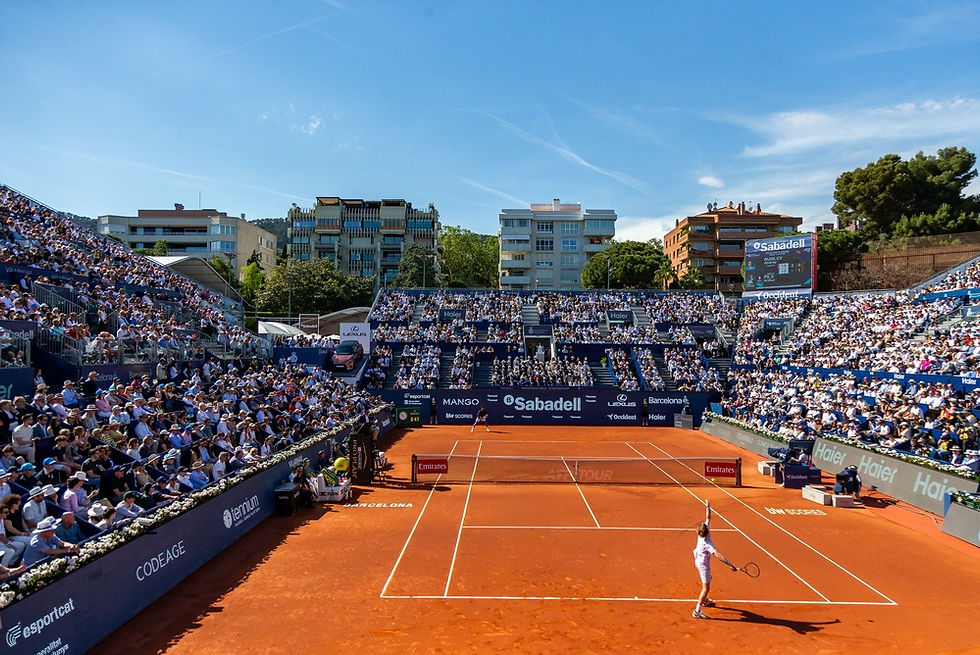
The T is the literal shape formed where the center service line meets the service line, splitting each box into deuce and ad sides. Coaches use the term two ways, and mastering both is what T zone control really means. First, it's a serve and groundstroke target — hitting a ball down the T aims it at that centerline seam, taking away angle from the returner. MasterClass's breakdown of serve types notes that a slice serve's sidespin causes the ball to either bounce away from the returner in the outer corner, or jam it right into the body when it's directed down the T.
Second — and this is the part recreational players almost never train — the T is a recovery position: the neutral home base a player returns to after every shot, positioned so both the deuce and ad corners are equally reachable. TENNIS LIFE's guide to serving down the T explains that going down the T is especially effective when a returner is guarding the alley, because it exploits a player who has already committed their weight toward covering the wide shot.

The Body Movement Behind T-Zone Control: Split Step, First Move, Recovery
Elite movement in tennis follows a five-phase cycle: split step, first move, movement, preparation, and recovery, according to coaching research from Mick McCarron's tennis-specific movement guide. The split step — a small hop timed to the exact moment an opponent contacts the ball — loads the legs like a spring, and Tennis Nation's footwork guide stresses that the feet should land just as the ball leaves the opponent's strings, not before. Skip it, and every other footwork skill gets harder.
Recovery back toward the T follows a pattern too. Global Agent Tennis Academy's movement-cycle breakdown recommends a first crossover step to cover maximum ground safely, followed by normal side steps once you're back in range — always staying ready to split-step again the moment your opponent is about to strike. This is the same footwork logic a center-back or holding midfielder uses to shuffle-recover into central space after stepping out to press.

The Low, Sliced Corner Shot: Attacking the T When Your Opponent Is Wrong-Footed
Here's the technical heart of T zone control: a low, sliced ball hit into a sharp angle or the corner of the T does two things a flat, high shot can't. It stays below the opponent's comfortable strike zone, forcing them to bend and generate their own pace, and — when their footing is already loading in the wrong direction — it removes their ability to redirect in time. This is what coaches mean when they talk about how to hit the corner of the T in tennis: low contact point, a continental grip, and a brushing action across and slightly under the ball to create the skidding sidespin described in MasterClass's slice serve tutorial.
Reading the opponent's feet before you commit to that shot is what separates a hopeful shot from a planned one. TENNIS LIFE points out that a receiver standing close to the alley has already told you where their weight is going — down the T (or a sharp angle the opposite way) takes advantage of exactly that commitment, whether it's off a serve, a return, or a rally ball.
Why Mastering the T Is Where Matches Are Actually Won
Every extra half-second a player has to set up their next shot compounds over a match. Grand Slam points are often decided in single-digit-shot margins — the 2025 US Open men's final between Carlos Alcaraz and Jannik Sinner included a 13-shot rally and a 19-shot rally in the same match, according to Olympics.com's live coverage, which Alcaraz eventually won 6–2, 3–6, 6–1, 6–4 to capture his sixth Grand Slam title. In rallies that long, the player who keeps recovering to a controlled central position — T zone control — is the one dictating when the point actually ends, not just reacting to it.
For a club or high school player, the scoring math is simple: better recovery position means fewer unforced errors on the next ball, more forced errors squeezed out of the opponent, and more short, weak replies you can finish at the net. The T isn't a decoration on the court diagram — it's the leverage point for every rally that follows.

The Slice, the Single-Handed Backhand, and the Forehand: Your T Zone Weapons
The slice is the natural shot for building T zone control because it's hit with the same continental grip used on serve, keeps the ball low, and disguises direction late — the ball can go down the T or out wide off a nearly identical swing shape. A single-handed backhand slice, in particular, lets a player stay compact and hit flat, low, and disguised without the extra prep time a two-handed grip change requires, which is exactly why it's such a common weapon for approach shots and defensive-to-offensive transitions down the middle.
The forehand plays a different role in the same system: it's the finishing shot. Once a slice or a well-placed serve down the T has pulled an opponent out of position or shortened their reply, an inside-out or inside-in forehand off that same recovered T position is what turns court control into an actual point won.
5 Training Tips to Master T Zone Control
Time your split step to contact, not flight. Have a partner or coach film you from behind the baseline and check whether your feet land as the opponent's racket touches the ball — not a beat later.
Mark your recovery spot. Place a cone or chalk mark at your ideal recovery position and make a rule: no next shot until your lead foot has touched it.
Drill the low slice into a target. Feed yourself or have a partner feed balls you slice into a towel or cone placed at the corner of the service box, focusing on a low, skidding bounce rather than height.
Practice reading feet before the swing. During live rallies, call out loud which direction your partner's weight is loading before you pick your own target — this builds the recognition habit under pressure.
Add wrong-footing reps. Once a partner reliably recovers to one side, deliberately hit back to that same side (instead of the open court) to practice punishing an early commitment — a core wrong-footing skill.

The Cone-and-Partner Precision Drill
This is the single best way to turn the ideas above into muscle memory, and it needs nothing but two players, a few balls, and two or three cones.
Place one cone at your baseline recovery spot (roughly in line with the center mark) and two more in the far corners of the service boxes.
Rally cooperatively with your partner. After every shot you hit, you must touch or step around your recovery cone before moving to the next ball.
Once the rally rhythm is steady, both players start aiming shots at the corner cones — rewarding a ball that lands within a racket-length of a cone with a point.
Progress the drill by having the feeder occasionally serve or feed down the T instead of to a corner, forcing the receiver to recognize the shot and recover correctly under a different angle.
The constraint of the cone does the coaching for you: it's nearly impossible to hit a precise corner or T-target shot if you never returned to a stable base after your last one, so the drill trains movement and shot precision at the same time.

BONUS: How US Open Pros Fuel a Long Tournament Day
Player nutrition at the US Open looks nothing like the concession stands fans see. While fan-facing areas at the USTA Billie Jean King National Tennis Center now include chef-driven pop-ups — José Andrés' Oyamel-inspired stand, a Wafu ramen concept, and Carnegie Deli among them, according to Elle Decor's 2025 US Open guide and the MICHELIN Guide's coverage of stadium chefs — the players' dining room is a different world. The East Hampton Star's reporting on player dining describes a room stocked with prepared lean proteins, complex carbohydrates, fruit, nuts, protein shakes, and sushi — food built for repeated matches over two weeks, not a single afternoon out.
The science behind that player-room menu comes down to one biological switch: NF-κB. Intense exercise activates NF-κB signaling, which triggers the inflammatory cascade responsible for a lot of post-match soreness and next-day heaviness, according to a 2024 review in the peer-reviewed journal Nutrients (MDPI). The same review notes that nutrients like curcumin and omega-3 fatty acids have been shown to reduce pro-inflammatory markers tied to that pathway — which is exactly why an anti-inflammatory eating pattern matters for anyone playing or training on consecutive days.
Building a plate around that goal doesn't require anything exotic. The core components are the same ones that show up in every credible sports-nutrition source:
Vegetables and salad for antioxidants and micronutrients that support recovery.
Sweet potatoes and other complex carbohydrates to restore glycogen without the crash of refined sugar.
Lean meats and fish (especially fatty fish) for protein and omega-3s that support tissue repair.
Whole grains and beans for steady, slow-digesting energy that doesn't spike and then drop mid-match — the fatigue pattern athletes want to avoid.
Food Sensitivities and Allergies: Build the Plate Around the Athlete, Not the Trend
None of the above is one-size-fits-all. Objective food allergy affects roughly 2.5–3% of the U.S. population, though self-reported adverse reactions run far higher, according to research summarized in the International Journal of Sport Nutrition and Exercise Metabolism. That gap matters: a 2025 pilot study published on PMC found that a gluten-free diet did not improve performance outcomes in non-celiac athletes doing sprint interval training, so eliminating a food group should be based on testing and tracked symptoms, not assumption.
For athletes who do have a confirmed sensitivity, MuscleBlaze's guide to food allergies and fitness recommends getting formally tested, then eliminating the confirmed trigger rather than a whole category of food. Practical swaps exist for nearly every restriction — Focus Physiotherapy's anti-inflammatory nutrition guide lists tofu, tempeh, lentils, and beans for dairy-free or vegetarian athletes, and seeds, tahini, or hummus for anyone avoiding nuts, so the anti-inflammatory pattern can still hold together.
Worst-Case Scenario: The Whole Foods Hot Bar
Not every athlete has a chef, and not every day allows for meal prep. On the road or between practices, a grocery store hot bar can be a legitimate backup — if it's stocked properly. A breakdown of Whole Foods' hot bar options recommends building around lean proteins like grilled chicken or baked fish, colorful roasted or sautéed vegetables, and a complex carbohydrate such as quinoa, brown rice, or sweet potato — the same short list from the anti-inflammatory plate above.
The caveat is real: quality at a hot bar varies location to location, and some reviewers have flagged inconsistent execution and less-than-ideal cooking oils at certain stores, as one customer review on Wanderlog points out. The fix isn't avoiding the hot bar altogether — it's skipping anything battered or deep-fried and building the plate around whole, recognizable ingredients, which keeps it a genuine fallback rather than a gamble.
This is the honest reality for most athletes, from a junior tennis player between matches to a soccer player squeezing in a meal between a shift at work and evening training: getting quality food consistently is genuinely hard when time is short, travel is involved, or a kitchen isn't available. The goal isn't a perfect diet every single day — it's a reliable, repeatable pattern that holds up on the busiest days, because those are the days recovery and performance need the most support.
5 Gold Nuggets
🏆 GOLD NUGGET — The T Is a Position, Not Just a Marking The T on a tennis court isn't decoration — it's the recovery position that determines your reaction time to every single shot your opponent hits next. |
🏆 GOLD NUGGET — Low and Sideways Beats High and Hopeful A low slice down the T can bounce into an opponent's body or skid away from them, taking away their timing and power before they've even reacted. |
🏆 GOLD NUGGET — NF-κB Is the Switch You Can Actually Influence NF-κB is the inflammatory pathway that turns hard training into next-day soreness — and the foods on your plate between matches can help turn that switch down. |
🏆 GOLD NUGGET — Test Before You Eliminate True food allergy affects only about 2.5–3% of people, even though many more report symptoms — get tested before cutting out entire food groups on assumption alone. |
🏆 GOLD NUGGET — A Hot Bar Can Work — With Rules The Whole Foods hot bar is a legitimate backup meal only when you skip the fried and battered trays and build around lean protein, roasted vegetables, and a whole grain. |
5 Actionable Steps to Take This Week
Mark your T recovery spot. Use a cone or chalk and make returning to it after every shot a non-negotiable habit in practice.
Film your split step. Record one practice session from behind the baseline and check whether your feet land as your opponent makes contact.
Run the cone-and-partner drill twice this week. Focus on the recovery-cone touch before adding the corner-target scoring.
Build one NF-κB-friendly plate today. Combine a lean protein, a colorful vegetable, and a complex carb like sweet potato or quinoa — and note how you feel the next day.
Scout your backup meal now. Identify a hot bar, grocery deli, or packed cooler option near your practice or travel routes before a rushed day forces a worse choice.


Comments