
The Beautiful Game's Ugly Price Tag: How the K-Shaped Economy and Corporate Psychopathy Are Pricing Fans Out of the 2026 FIFA World Cup
Published June 2026 | ~1,200 words

The World's Greatest Stage — If You Can Afford the Ticket
There is nothing quite like watching your country play on the biggest stage in world football. The anthems, the colour, the shared humanity of eighty thousand strangers united by a single scarf and a shared dream — this is what the K-shaped economy World Cup 2026 is quietly dismantling, one pricing algorithm at a time.
The 2026 FIFA World Cup, stretching across 16 cities in the United States, Canada, and Mexico from June 11 to July 19, is the largest football tournament in history — 48 teams, 104 matches, and a projected revenue exceeding $11 billion for FIFA. That last number is worth sitting with. Because the fans who built this sport with their voices, their wallets, and their lifetimes of loyalty are increasingly being shown where they stand: firmly outside the gates.
Here is what the data is telling ordinary fans right now:
Tickets for the World Cup Final at MetLife Stadium are listed at up to $8,680 on official channels — rising to $32,970 after price increases, and touching $143,750 on FIFA's own resale platform.
Hotel rooms in Boston are averaging $611 per night during match dates — a year-over-year increase of over 80% across 13 of the 16 host cities, according to FCM Consulting.
Corporate hospitality suites through On Location, FIFA's exclusive hospitality contractor, start at $2,500 per match and reach $73,200 — with private pitch-side lounges available at $45,740 per person.
Only 2% of total ticket inventory was offered at the $60 "Supporter Entry Tier" following public outcry — a concession critics described as a cosmetic gesture, not a solution.
A travelling fan following their nation from group stage to final faces a minimum spend of $6,900 through official supporter channels, according to Football Supporters Europe (FSE).
None of this happened by accident. It is the natural product of two converging forces: a K-shaped economy World Cup 2026 dynamic that has been accelerating for years, and a corporate mindset that sees sport not as a public good but as a revenue extraction mechanism.
If your looking for melodic house combined European elements, with reggaeton or dembow beat, because you are looking for something that is a bit orchestral has some Glockenspiel, and want to experience something different then listen to Podium. You have piano, synth, guitar and more.
It’s good for travel, work commutes, sports training, relaxing, enjoying life at a party and more.
Listen/Follow Pavł Polø on Spotify.
K-shaped Economy World Cup 2026
The K-Shaped Economy: A Quick Primer for the Business-Minded
In the aftermath of the 2008 financial crisis — and again following the pandemic — economists began describing recovery patterns not as the traditional V, U, or W shapes, but as a K. The top arm of the K represents asset holders, high earners, and corporate interests that recovered quickly and, in many cases, surged. The bottom arm traces those left behind: lower-income workers, younger consumers, and the middle class, who have seen stagnant wages, sticky inflation, and diminishing purchasing power.
By 2025 and into 2026, the divergence had grown stark. Research from Mark Zandi at Moody's Analytics found that the top 10% of wealthiest Americans were responsible for 49% of all consumer spending in Q2 2025. Morgan Stanley's chief investment officer Lisa Shalett captured the mood precisely, noting that the income inequality situation had become, as she put it, "completely wackadoo." Economists like RSM's Joe Brusuelas went further: "We've been in a K-shaped economy for the better part of two decades."
The 2026 World Cup is the K-shaped economy made flesh. It is not a sporting event that happens to have expensive tickets. It is a financial product that happens to have a football match attached.
★ GOLD NUGGET — Business Intelligence: For savvy business observers, the World Cup pricing model offers a masterclass in what happens when a monopoly controls a high-demand, time-sensitive asset. FIFA's monopoly over ticket sales means there is no competitive pressure to keep prices reasonable — a dynamic formally challenged by Football Supporters Europe and Euroconsumers in an 18-page complaint filed with the European Commission in March 2026.
Corporate Hospitality vs. The Fan: A Stadium Divided
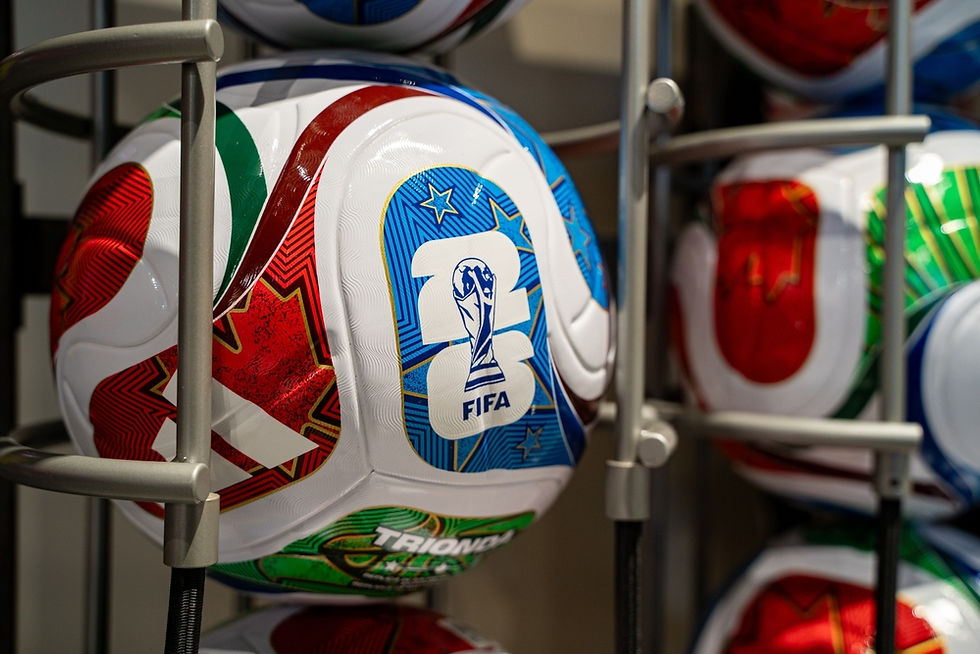
Let us be precise about who is winning here. On Location — FIFA's exclusive, politically connected hospitality contractor — offers tiered access that transforms match attendance from a fan experience into a corporate entertainment package. Their "FIFA Pavilion Standard" starts at $19,860. Their premium pitch-side lounge, complete with champagne, tailored dining, celebrity appearances, and a gift package, comes in at $45,740 — per person.
The cheapest hospitality option at any 2026 World Cup venue is $1,350, already some 40% higher than the Qatar 2022 floor. These packages are not sold to supporters who have spent decades following their national team. They are sold to corporate entertainment directors looking for client relationship opportunities and networking environments at the world's most-watched sporting event.
The human cost of this model is beginning to show up in the data. A 2024 academic paper published in the Journal of Institutional Economics found a direct link between mega-event organisation and increased wealth inequality in host regions. Victor Matheson, a sports economist at the College of the Holy Cross, warned: "It's a real concern that you might have a world where stadiums — instead of being full of vibrant and excited fans — are instead full of rich people on their phones taking selfies for their influencer accounts."
This is not hyperbole. In Boston, Philadelphia, and Seattle, hotel demand trailed behind a typical summer season. Across all 16 host cities, thousands of group-stage tickets remained unsold as the tournament opened — despite FIFA claiming overall sales were strong. The resale market told a different story: one group-stage fixture dropped below $100 per ticket as scalpers, who had bet on higher demand, could not offload their inventory.

Corporate Psychopathy: The Structural Logic Behind the Numbers
Here is where the K-shaped economy World Cup 2026 dynamic intersects with something darker. Research by Dr. Paul Babiak and Dr. Robert Hare — the psychologists who developed the Psychopathy Checklist-Revised (PCL-R) — has found that the prevalence of psychopathic traits among corporate executives may be as high as 3–4%, three to four times higher than in the general population. Their landmark work, Snakes in Suits: When Psychopaths Go to Work, argues that traits like charm, manipulativeness, risk tolerance, and a calculated absence of empathy are routinely mistaken for leadership qualities.
Corporate psychopaths — clinically described as individuals who view the world through a purely utilitarian lens and are incapable of empathy toward those they affect — are not violent. They operate within the law. They are, as the FBI's Law Enforcement Bulletin has noted, "gifted with an accurate perception of reality" but characterised by a complete indifference to the human consequences of their decisions.
Apply that framework to FIFA's decision-making process for 2026, and it is not difficult to see the pattern. Dynamic pricing was introduced for the first time in World Cup history — a mechanism that, as one analyst put it, raises ticket costs by an average of 35% across 95 of 104 matches. FIFA's ticketing revenue for 2026 is projected at $3 billion, representing 27% of total tournament revenue — compared to the historical 10–15% norm. And when fan groups formally protested, FIFA president Gianni Infantino told supporters to "chill."
★ GOLD NUGGET — The Atmosphere Problem: Here is the business risk that corporate decision-makers consistently underweight: atmosphere is the product. The emotional energy that makes a World Cup worth $11 billion in broadcast rights is generated by fans — not by suite holders on their second glass of Moët. Strip out the fans, and you are left with an extremely expensive sporting event that feels like a corporate conference with grass. The long-term brand damage to FIFA, to football, and to the host cities may take a decade to fully price.

The Resale Market: When Fan Loyalty Becomes a Scalper's Inventory
FIFA's own resale platform — meant to serve as an official secondary market — became a source of scandal when a Category 3 seat for the opening match between Mexico and South Africa at the Azteca Stadium appeared at $5,324 against an original price of $895. The cheapest final ticket on the resale platform sat at $9,775 going into the tournament. One seat for the final was listed at $143,750 — more than 41 times its original face value.
Scalpers bought in bulk, anticipating sustained demand. When ordinary fans — facing the full layered cost of a $1,000 ticket, a $400 flight, a $611-per-night hotel, and $175 stadium parking — baulked, scalpers were left holding inventory that the market no longer wanted at those prices. Anti-US sentiment, stricter visa requirements including a $15,000 bond for some nationalities, and a broader sense of disillusionment contributed to slower international bookings than host cities had been promised.
The result is a peculiar paradox: a sold-out World Cup with empty-feeling stadiums in some lower-profile matches, and hotel occupancy rates in U.S. cities trailing far behind their Canadian and Mexican counterparts.
What a Fair Pricing Model Actually Looks Like
The evidence from consumer psychology and event economics is consistent: tiered, transparent, and anti-scalping pricing frameworks build trust, sustain long-term attendance, and generate more durable brand value than pure yield maximisation. Consider the contrast: in Russia 2018, the most expensive final ticket cost $1,100. The cheapest was $110. In 2026, comparable categories are seven times higher, minimum.
A responsible three-tier model for an event like the World Cup would look something like this:
Budget Tier ($60–$150): Allocated to national federations for loyal registered supporters. Non-transferable. Identity-verified. Group and family packages with reduced per-seat pricing. Anti-resale protections baked into the digital ticket.
Premium Tier ($300–$600): Standard match attendance with better sightlines. Available through official channels with purchase limits per person. Family bundles and multi-match discounts to reward commitment and reduce per-unit churn.
Luxury / Corporate Tier ($1,500+): Hospitality suites, lounge access, catering — everything On Location currently offers. Clearly delineated. Allocated to corporate buyers. Does not cannibalise fan allocation.
Group and family packages, properly structured, serve a dual purpose: they make events accessible to the demographic most likely to develop lifelong fandom, and they are economically less amenable to resale. A father buying four tickets for his family at a discounted rate is not going to flip them to a scalper. He is going to create four more supporters for the next thirty years.
★ GOLD NUGGET — Trust Economics: Events that are seen as fair and accessible generate organic advocacy. Events perceived as extractive generate boycott movements, EC complaints, and attorney general investigations — all of which are now part of the 2026 World Cup's public record. Predictability and transparency in pricing are not altruistic gestures; they are strategic assets.
5 Actionable Steps for the Savvy Person Navigating This Environment
Register directly with your national federation's official supporter program. National associations received discounted allocations — some as low as $60 — that bypass FIFA's general pricing. The Football Association, DFB, and similar bodies managed their own affordable supporter tiers. If you haven't registered, do it now ahead of the next major tournament.
Book accommodation well outside the city centre and do the maths. England fan groups attending 2026 are budgeting $75 per person per night by staying in motels and Airbnbs up to an hour's drive from venues. A $300 downtown hotel versus a $75 motel plus a $20 rideshare is a $180 saving per night. Over seven nights, that's nearly $1,300 in your pocket.
Monitor the official resale platform in the weeks before matches. Scalpers who over-bought inventory are forced to offload at losses as kick-off approaches. Several group-stage matches in 2026 saw resale prices drop below $100 per ticket in the days before the game. Patience, in this market, is a financial strategy.
Use fan watchdog organisations as your information source. Football Supporters Europe (footballsupporterseurope.org) and national supporters' associations publish price alerts, complaints guidance, and resale monitoring that no mainstream travel site provides. They are the consumer protection layer that FIFA removed by taking direct control of ticketing.
Advocate for better by making your spending choices visible. If you attend — or deliberately skip — an event due to pricing, tell your national federation in writing. Commercial bodies respond to structured feedback that maps to behaviour data. Your absence from a stadium is invisible; your letter to the FA explaining why is not.
The Bottom Line
The 2026 FIFA World Cup is an extraordinary sporting event running alongside an instructive business case study. The K-shaped economy World Cup 2026 framework reveals the same structural logic at work in housing, healthcare, and higher education: assets have been repriced for those at the top of the K, and access for everyone else has become conditional on how loudly they protest.
Corporate psychopathy, as a leadership framework, thrives when accountability is diffuse and competition is absent. FIFA's monopoly over ticketing, hospitality, and broadcast creates precisely that condition. The result is a World Cup that will be remembered — in business schools, if not in football stands — as a case study in what happens when the people running the world's most popular sport stop being able to imagine the people who actually love it.
The beautiful game deserves a fairer stage. And the business case for giving it one is stronger than the current model suggests.
References & Further Reading
Click each link to read the source.
FIFA's Infantino defends World Cup ticket prices — PBS NewsHour (June 2026)
FIFA's Dynamic Pricing Risks Keeping Actual Fans from the World Cup — Fortune (June 2026)
Dynamic Pricing Adding to 'Dystopian' 2026 World Cup — Al Jazeera (April 2026)
Fan Groups File Complaint Against FIFA Over World Cup Ticket Prices — ESPN (March 2026)
Fans Slam FIFA, Demand Halt to 'Extortionate' Ticket Sales — Al Jazeera (December 2025)
High Prices, Empty Hotels: US Fears World Cup Sticker Shock Will Deter Fans — Ynet News (2026)
World Cup Fans Face 'Significant Sticker Shock' for Hotels — Front Office Sports (June 2026)
The K-Shaped Economy of the Rich Doing Fine — Business Insider (2025)
FIFA World Cup 2026: Who Is Paying and How Much It May Cost Fans — WION News (2026)
FIFA World Cup Ticket Controversy: Why 180,000 Tickets Are in the Resale Market — WION (2026)
FIFA Responds to Fan Outrage, Establishes $60 Ticket Tier — LA Times / AOL (2025)
2026 World Cup Overshadowed by Sky-High Ticket Prices — World Socialist Web Site (June 2026)
Journal & Academic Sources
Babiak, P. & Hare, R.D. (2006). Snakes in Suits: When Psychopaths Go to Work. HarperCollins. — foundational text on corporate psychopathy.
Corporate Psychopathy: Talking the Walk — PubMed / NCBI (Babiak et al., 2010)
Mega-Events and Wealth Inequality — Journal of Institutional Economics (2024)
2026 World Cup Economic Impact Analysis — Goldman Sachs / Sporting Goods Intelligence (June 2026)
2026 FIFA World Cup: A Macro Event with Micro-Level Impacts — Saxo Bank Research (2026)
© 2026 — Fact-checked and compiled from live reporting, academic research, and primary data. All prices cited reflect publicly available figures at time of writing.

Comments