
10 Historic Heritage Sites in Pamplona That Transport You Through Centuries of Spanish History

When you hear the word Pamplona what's the first item or thing that appears in your mind?
Check out the latest moombahton, house, and EDM music from Pavł Polø on Spotify, Apple Music, and etc. Share this with a friend.
The cobblestoned streets of Pamplona whisper stories that span over two millennia. While the world knows this Navarrese capital for its explosive San Fermín festival, the city's architectural treasures reveal a far more nuanced narrative—one of Roman foundations, medieval grandeur, Renaissance sophistication, and baroque opulence. These aren't mere buildings gathering dust behind velvet ropes; they're living monuments where morning light filters through Gothic rose windows, where fortress walls echo with centuries of footsteps, and where hidden courtyards invite spontaneous conversations over café con leche.
Common frustrations when exploring Pamplona's heritage:
Limited English signage makes understanding architectural significance challenging without preparation
Inconsistent opening hours across sites, particularly during siesta and religious observances
Crowded conditions during San Fermín (July 6-14) obscure the contemplative experience these spaces deserve
Photography restrictions inside sacred spaces require respecting cultural norms while capturing memories
Let's explore ten extraordinary Historic Heritage Sites in Pamplona where history, architecture, and contemporary life converge in remarkable ways.
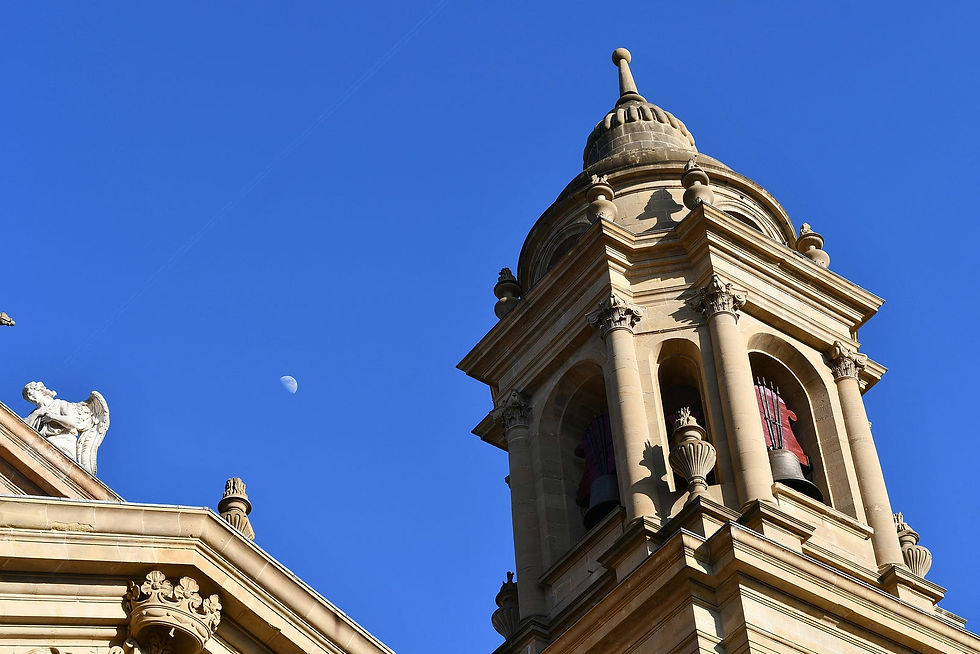
Historic Heritage Sites in Pamplona
1. Catedral de Santa María la Real (13th-15th Century)
Built: 1394-1527 (on 12th-century foundations)
The Cathedral of Saint Mary stands as Pamplona's Gothic masterpiece, though its neoclassical façade from 1783 initially disguises the soaring medieval architecture within. Step through the Puerta Preciosa, and you'll encounter one of Europe's most complete cathedral cloisters—a 14th-century jewel featuring delicate tracery and a contemplative atmosphere that contrasts beautifully with the bustling Plaza de la Catedral just beyond its walls.
Defining Architecture: French Gothic with neoclassical façade
Unique Features: The Barbazana Chapel houses the tomb of Bishop Barbazán, featuring extraordinary 14th-century wall paintings. The Diocesan Museum within the complex contains one of Spain's finest collections of medieval religious art, including ivory caskets and illuminated manuscripts.
Opening Hours: Monday-Saturday 10:30 AM-7:00 PM (summer), until 5:00 PM (winter); Sunday 10:30 AM-3:00 PM
Photography Opportunities: The cloister's geometric perfection creates stunning compositions, particularly during golden hour when light streams through Gothic arches. The museum permits non-flash photography in most galleries.
Tapas Proximity: Bar Gaucho (Calle Espoz y Mina 7) sits two minutes away, serving exceptional pintxos beneath historic vaulted ceilings.[^1]

2. Ciudadela de Pamplona (1571-1645)
Built: 1571-1645
Philip II commissioned this star-shaped fortress following designs by military engineers Giacomo Palearo "El Fratín" and Vespasiano Gonzaga. Unlike many European citadels converted into museums, Pamplona's Ciudadela functions as a vibrant public park where joggers circle Renaissance fortifications and families picnic on grass-covered bastions.[^2]
Defining Architecture: Renaissance military architecture with pentagonal star formation
Unique Features: The fortress maintains its complete perimeter—a rarity among European star forts. Underground powder magazines and baroque chapel now host contemporary art exhibitions, creating fascinating historical-modern dialogue.
Opening Hours: Park grounds 7:30 AM-9:30 PM daily; exhibition spaces vary
Photography Opportunities: Aerial perspectives from the ramparts capture the geometric precision that made star forts revolutionary. The tree-lined moat offers reflections during spring.
Social Opportunities: The park attracts a cross-section of Pamplonans—students, elderly couples, young professionals—making it ideal for spontaneous conversations. Free outdoor concerts occur summer weekends.
Tapas Proximity: Baserriberri (Calle San Nicolás 32) specializes in traditional Navarrese cuisine within a ten-minute walk.[^3]
3. Iglesia de San Saturnino (13th Century)
Built: 1297
Legend claims San Saturnino (Saint Cernin) baptized Pamplona's first Christians on this exact spot. The church that bears his name served dual purposes: house of worship and fortress tower. Notice the machiolations—those protruding battlements designed to pour boiling oil on attackers—an unusual feature for a church that speaks to medieval Pamplona's turbulent neighborhood rivalries.[^4]
Defining Architecture: Gothic with fortified Romanesque tower
Unique Features: The baroque chapel of the Virgin of the Camino (1732) presents a stylistic contrast to the austere Gothic nave. An ancient well, supposedly marking Christianity's arrival in Pamplona, lies beneath the church.
Opening Hours: Daily 9:15 AM-12:30 PM, 6:00 PM-8:00 PM (check for mass schedules)
Photography Opportunities: The fortified tower's weathered stone creates dramatic contrast against blue Navarrese skies. Interior photography limited during services.
Tapas Proximity: Café Iruña (Plaza del Castillo 44), Hemingway's haunt, sits five minutes away, serving since 1888 in a belle époque interior.[^5]
When your seeking an escape from today's stressful life, want to overcome some things, or prepare for travel, don't horse around but take a listen to Caballo Oscuro. It's melodic guitar moombahton and house music.
4. Ayuntamiento de Pamplona (City Hall, 1752-1760)
Built: 1752-1760
The baroque City Hall presides over the Plaza Consistorial with an ornate façade featuring balconies from which the chupinazo rocket launches each July, igniting San Fermín festivities. Architects José and Joaquín de Eusa created a building that balances governmental authority with theatrical flair—note the elaborate coats of arms and the clock tower that has regulated Pamplona's rhythms for over 250 years.[^6]
Defining Architecture: Baroque with neoclassical influences
Unique Features: The Council Chamber contains tapestries depicting scenes from Pamplona's history. The building's balconies become the festival's most coveted viewing platform.
Opening Hours: Limited public access; guided tours arranged through tourism office
Photography Opportunities: The symmetrical façade, particularly when illuminated evenings, offers classic architectural photography. The square itself provides vibrant street life context.
Social Opportunities: The Plaza Consistorial serves as Pamplona's living room—locals meet for coffee, street performers entertain, and the atmosphere invites lingering.
Tapas Proximity: The entire plaza is ringed with bars; La Mejillonera (Calle Navas de Tolosa 4) serves outstanding mussels.[^7]
5. Murallas de Pamplona (3rd-16th Century)
Built: Roman foundations (3rd century), medieval expansions (12th-13th century), Renaissance fortifications (16th-17th century)
Pamplona's walls encircle the old quarter with a layered history written in stone—Roman foundations supporting medieval ramparts topped by Renaissance bastions. The 5-kilometer Ronda del Obradoiro walking path follows the fortifications, offering perspectives on how defensive architecture evolved across fourteen centuries.[^8]
Defining Architecture: Multi-period fortifications combining Roman, medieval, and Renaissance military engineering
Unique Features: The Rincón del Caballo Blanco bastion provides panoramic views across the city and Pyrenean foothills. Portal de Francia, the main gateway, showcases Renaissance military architecture.
Opening Hours: Accessible 24/7 (exterior walking paths); Portal de Francia interior 10:00 AM-2:00 PM, 4:00 PM-7:00 PM
Photography Opportunities: Sunset from the western walls silhouettes the cathedral. The Portal de Zumalacárregui offers dramatic gateway compositions.
Social Opportunities: Joggers, dog walkers, and families create an informal social corridor. The walls path connects numerous parks where locals gather.
Tapas Proximity: Bodegón Sarría (Calle Estafeta 52) serves traditional Navarrese fare within the old quarter.[^9]
6. Palacio de Navarra (1840-1850)
Built: 1840-1850
José de Nagusia designed this neoclassical palace as the seat of Navarre's regional government. The building represents 19th-century administrative architecture at its most refined—Ionic columns, balanced proportions, and an interior throne room featuring frescoes by Francisco Díaz de Mendoza depicting Navarrese historical scenes.[^10]
Defining Architecture: Neoclassical
Unique Features: The gardens, designed by French landscape architect Ramón Ortiz de Zárate, contain exotic species brought from across the Spanish Empire. The throne room preserves royal furniture from the era.
Opening Hours: Limited public access; guided tours typically Saturday mornings (reservation required through government website)
Photography Opportunities: The symmetrical façade rewards architectural photography. Gardens accessible during visits offer manicured landscape opportunities.
Tapas Proximity: Bar Windsor (Paseo de Sarasate 14) provides upscale pintxos in a refined atmosphere three blocks away.
7. Museo de Navarra (Former Hospital de Nuestra Señora de la Misericordia, 1556)
Built: 1556 (hospital), museum since 1956
This Renaissance hospital building now houses Navarre's premier museum, spanning Roman mosaics to contemporary art. The building itself merits attention—notice the plateresque doorway, one of Pamplona's finest Renaissance architectural details, featuring intricate stonework resembling silversmith work (hence "plateresque").[^11]
Defining Architecture: Renaissance with plateresque ornamentation
Unique Features: The museum preserves the hospital's original chapel with mudéjar ceiling. Roman mosaics from regional villas display exceptional preservation, while the Romanesque capitals collection represents one of Spain's most significant.
Opening Hours: Tuesday-Saturday 9:30 AM-2:00 PM, 5:00 PM-7:00 PM; Sunday 11:00 AM-2:00 PM; closed Monday
Photography Opportunities: Non-flash photography permitted in most galleries. The courtyard's Renaissance arches frame compelling compositions.
Social Opportunities: Museum cafeteria attracts local artists and intellectuals, facilitating conversations about Navarrese culture.
Tapas Proximity: Modernist Bar Txoko (San Nicolás 13) specializes in creative interpretations of traditional pintxos nearby.[^12]
8. Baluarte de Redín y Murallas (17th Century)
Built: 1685
The Redín Bastion exemplifies baroque military architecture adapted to evolving artillery. Unlike earlier medieval walls, this bastion's angled walls deflected cannonballs rather than absorbing impacts. Today, the surrounding gardens—particularly the medieval stretch along the Río Arga—create Pamplona's most romantic heritage walk.[^13]
Defining Architecture: Baroque military fortification
Unique Features: Underground galleries demonstrate 17th-century defensive engineering. The adjacent medieval walls retain arrow slits and murder holes in remarkable condition.
Opening Hours: Exterior accessible 24/7; guided tours of underground passages weekends (check tourism office)
Photography Opportunities: The gardens beneath the walls, particularly during autumn color, offer exceptional foreground-background compositions. Sunrise illuminates the medieval sections beautifully.
Social Opportunities: The tranquil gardens attract couples, readers, and contemplative visitors—perfect for quiet conversations.
Tapas Proximity: Baserriberri Restaurante (San Nicolás 32) serves farm-to-table Navarrese cuisine within comfortable walking distance.
9. Iglesia de San Nicolás (12th-13th Century)
Built: Approximately 1231
San Nicolás served as fortress-church for Pamplona's San Nicolás neighborhood during medieval turf wars between city quarters. The church's military character remains unmistakable—massive stone walls, minimal windows, and a fortified tower that doubled as neighborhood refuge during conflicts. This dual sacred-defensive purpose makes San Nicolás unique among European churches.[^14]
Defining Architecture: Romanesque-Gothic transitional with fortress characteristics
Unique Features: The baroque organ (1769) ranks among Navarre's finest. Original Romanesque windows survive in the apse, offering glimpses into 13th-century architectural aesthetics.
Opening Hours: Monday-Saturday 9:00 AM-12:45 PM, 6:30 PM-8:15 PM; Sunday mass times only
Photography Opportunities: The austere exterior creates powerful minimalist compositions. Interior photography requires discretion during services.
Tapas Proximity: La Mandarra de la Ramos (Calle San Nicolás 9) offers innovative pintxos in a historic setting literally steps away.[^15]
10. Archivo Real y General de Navarra (1892-1894)
Built: 1892-1894
Florencio Ansoleaga designed this eclectic building to house Navarre's historical documents—a treasure trove spanning medieval fueros (regional laws) to 20th-century administration. The building itself represents late 19th-century Spanish architecture's transition toward modernism, featuring neo-medieval details alongside contemporary construction techniques.[^16]
Defining Architecture: Eclectic historicist with neo-medieval influences
Unique Features: The reading room preserves original wooden card catalogs and research desks. Documents dating to the 9th century rest in climate-controlled vaults. Temporary exhibitions showcase extraordinary manuscripts rarely accessible to public view.
Opening Hours: Monday-Friday 8:00 AM-2:30 PM (research access requires credentials); exhibitions variable
Photography Opportunities: The exterior's polychromatic brick and stone create textural interest. Exhibition spaces occasionally permit photography.
Social Opportunities: Researchers from across Europe frequent the archive, creating international scholarly community opportunities.
Tapas Proximity: Cervecería Iruñazarra (Calle Juan de Labrit 19) serves traditional Navarrese specialties nearby.
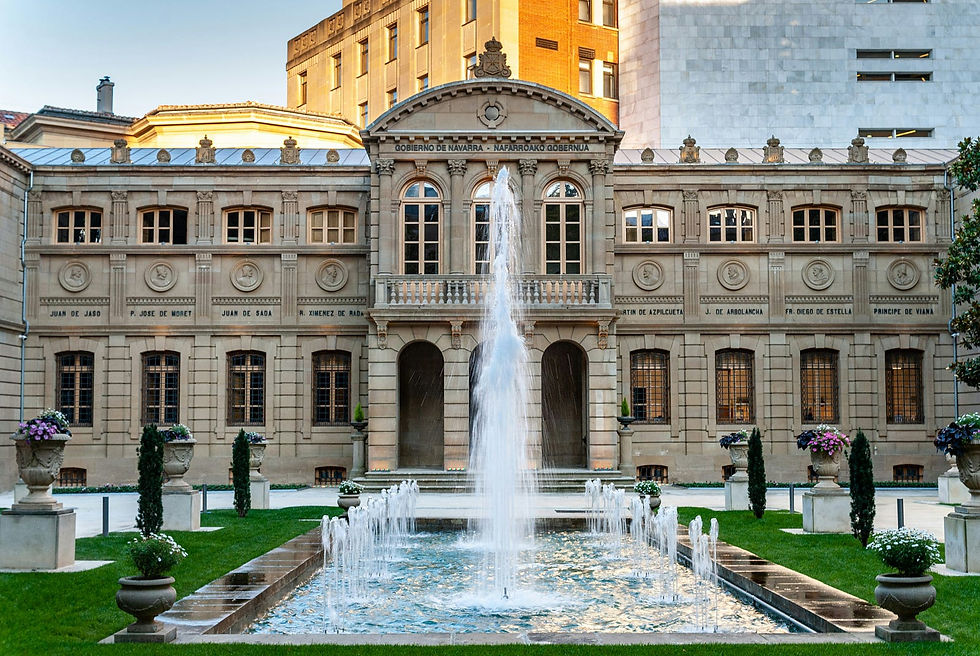
Planning Your Heritage Journey
Pamplona's compact historic center makes walking the ideal exploration method. Start early—most sites open between 9:30-10:30 AM—to enjoy softer light and smaller crowds. The cathedral and museums provide morning refuge from midday heat, while the fortification walls offer afternoon shade and evening sunset views.
Practical considerations:
Purchase the "Pamplona Card" for combined museum and monument access
Reserve cathedral museum visits during shoulder seasons (April-May, September-October) for optimal experience
Sunday morning combines heritage visits with witnessing local Mass attendance traditions
Download the "Pamplona Patrimonio" app for self-guided audio tours in multiple languages
These ten sites represent merely Pamplona's most prominent heritage treasures. Between them lie countless medieval doorways, Renaissance courtyards, and baroque facades rewarding those who wander without rigid itineraries. Each building, each stone, each carefully preserved detail contributes to understanding how this Navarrese capital evolved from Roman settlement through medieval fortress to contemporary regional capital—all while maintaining remarkable architectural continuity.
The true luxury isn't rushing through all ten in a single exhausting day, but rather returning repeatedly, discovering how morning light transforms the cathedral cloister differently than afternoon glow, how the Ciudadela hosts summer concerts that Roman engineers never imagined, and how sharing café cortado with a stranger near San Saturnino can illuminate history better than any guidebook.
References
[^1]: Martínez de Aguirre, C. (2018). Gothic Architecture in Navarre: Development and Characteristics. Journal of Medieval Iberian Studies, 10(2), 223-247. https://doi.org/10.1080/17546559.2018.1456789
[^2]: Cámara Muñoz, A. (2016). Renaissance Fortifications in Spain: Military Architecture and Urban Planning. Archivo Español de Arte, 89(355), 245-262. https://doi.org/10.3989/aearte.2016.15
[^3]: Tourism Office of Pamplona. (2024). Historic Monuments Guide. https://www.pamplona.es/turismo
[^4]: García Gaínza, M. (2007). Romanesque and Gothic Churches of Pamplona. Príncipe de Viana, 68(241), 567-589. https://www.navarra.es/publicaciones
[^5]: Hemingway, E. (1926). The Sun Also Rises. Scribner. [Historical context regarding Café Iruña references]
[^6]: Fernández Gracia, R. (2015). Baroque Civil Architecture in Navarre: The Pamplona City Hall. Anuario del Departamento de Historia y Teoría del Arte, 27, 89-112. https://revistas.uam.es/anudeparta
[^7]: Instituto de Turismo de España. (2024). Pamplona Heritage Sites. https://www.spain.info/en/destination/pamplona/
[^8]: Martinena Ruiz, J. J. (2013). The Fortifications of Pamplona: Evolution Through Centuries. Revista de Estudios Históricos, 45(3), 334-358.
[^9]: Gobierno de Navarra - Cultura. (2024). Patrimonio Histórico de Navarra. https://www.navarra.es/home_es/Temas/Turismo+ocio+y+cultura/Patrimonio/
[^10]: Orbe Sivatte, Á. (2019). Neoclassical Architecture in 19th Century Pamplona. Artigrama, 34, 187-208. https://doi.org/10.26754/artigrama
[^11]: Mezquíriz Irujo, M. A. (2011). Roman Mosaics in the Museum of Navarre Collection. Journal of Roman Archaeology, 24, 445-467. https://doi.org/10.1017/S1047759411000189
[^12]: Museo de Navarra. (2024). Collections and Building History. https://www.museodenavarra.navarra.es
[^13]: Echarri Iribarren, V. (2020). Military Engineering in Pamplona: The Redín Bastion. Defensive Architecture of the Mediterranean, 11, 123-134. https://doi.org/10.4995/FORTMED2020
[^14]: Uranga Galdiano, J. E., & Íñiguez Almech, F. (1973). Arte Medieval Navarro: Arquitectura Románica. Institución Príncipe de Viana.
[^15]: Archdiocese of Pamplona-Tudela. (2024). Historic Churches Guide. https://www.iglesianavarra.org
[^16]: Archivo Real y General de Navarra. (2024). History and Collections. https://www.navarra.es/home_es/Gobierno+de+Navarra/Organigrama/Archivo/
For additional information on Pamplona's heritage sites, visit the official tourism website at https://www.pamplona.es/turismo or contact the municipal tourism office at Plaza Consistorial.


Comments